Pull out your phone right now and try to get somewhere without GPS. Go ahead, try it. Feel that little flutter of panic? That mild sense of helplessness? Congratulations — you're experiencing what your grandparents would have called "Tuesday."
Before satellites started telling us where to turn, navigation was a skill passed down through families like recipes or fishing techniques. It required preparation, patience, and the kind of spatial intelligence that smartphones have systematically erased from our brains.
The Lost Art of Pre-Trip Planning
In 1975, planning a family vacation from Detroit to Disney World wasn't something you could do on your lunch break. It was a weeks-long project that involved the entire family.
 Photo: Disney World, via wallpapers.com
First, you'd call AAA — assuming you were a member — and request a TripTik. These weren't just maps; they were custom-bound booklets showing your exact route, complete with highlighted highways, recommended stops, and warnings about construction zones. The AAA office would literally trace your journey by hand, marking each page with a highlighter.
But the TripTik was just the beginning. Smart travelers bought a proper road atlas — usually the Rand McNally — and spent evenings studying the route like generals planning a campaign. They'd identify backup routes in case of traffic, locate gas stations in remote areas, and memorize landmark sequences: "After the big Sinclair sign, look for the grain elevator, then turn left at the Dairy Queen."
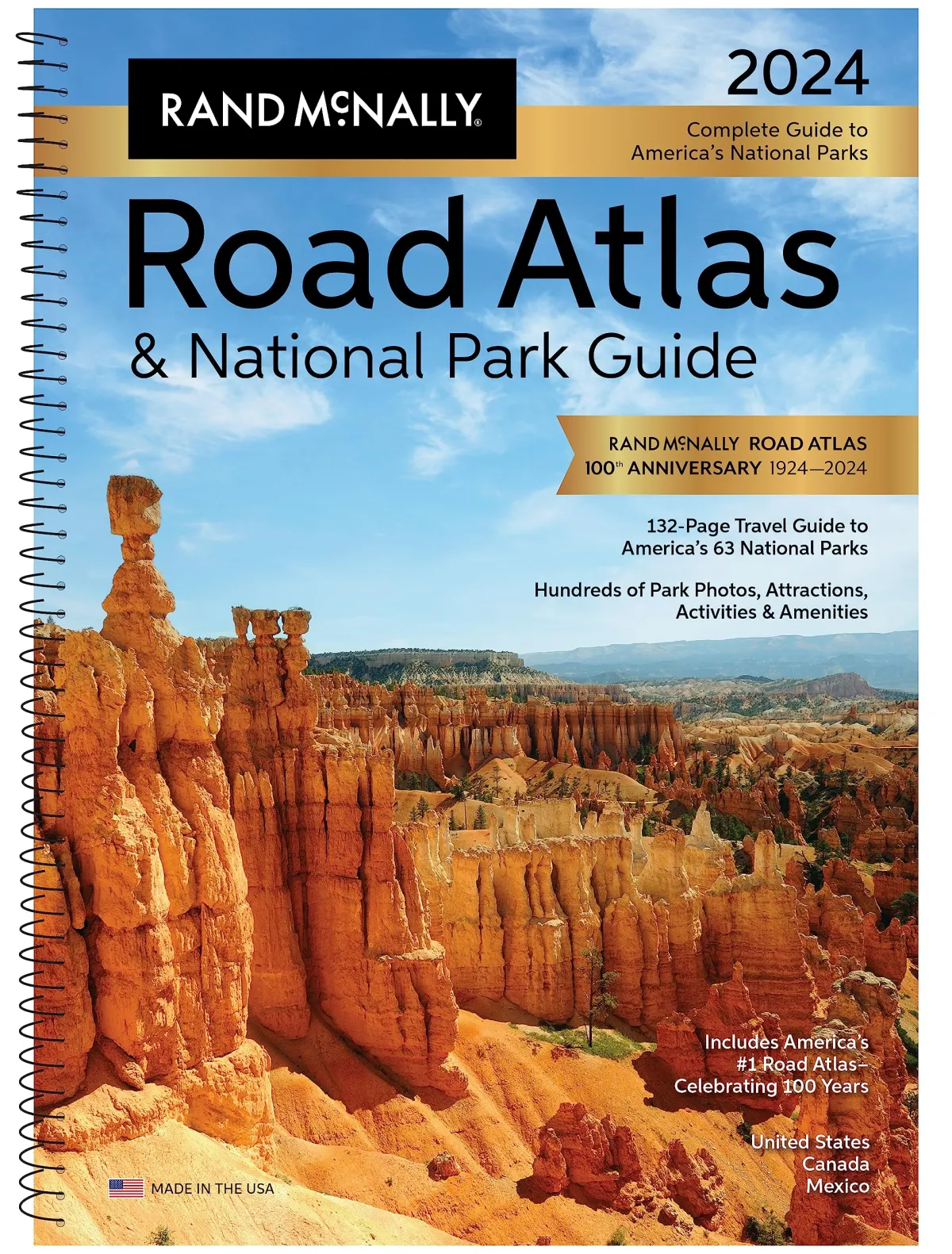 Photo: Rand McNally, via m.media-amazon.com
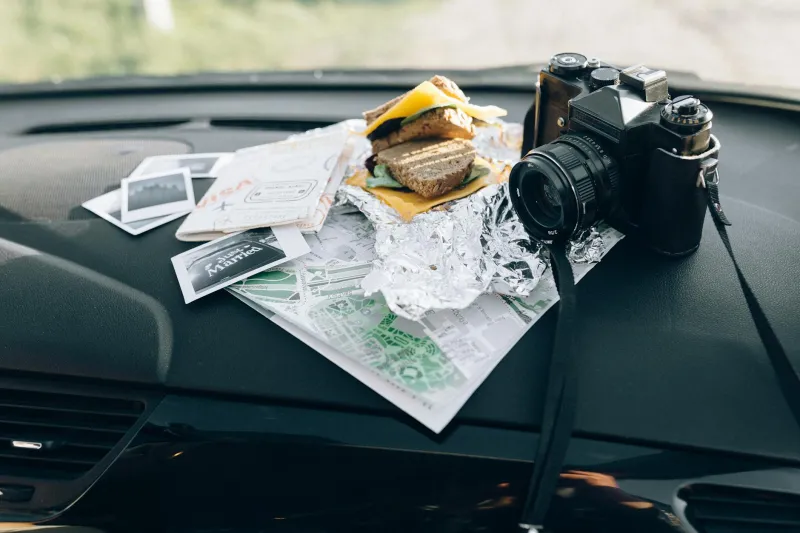
Fathers would quiz children on state capitals and highway numbers. Mothers would compile lists of motels and restaurants along the route, complete with phone numbers copied from guidebooks. The glove compartment became a mobile command center stuffed with maps, notebooks, and emergency phone numbers.
Navigation as a Family Affair
Once on the road, navigation was a team sport. The passenger seat wasn't just for riding — it was the navigator's station, complete with responsibilities that could make or break a trip.
The navigator's job was part mathematician, part psychologist. They had to read maps while bouncing down highways, calculate distances and driving times, and — most crucially — communicate directions clearly enough that a stressed driver could follow them without causing an accident.
Families developed their own navigation languages. "Turn left at the big red barn" was more reliable than "turn left on County Road 47" because barns didn't change their names. Kids learned to read mile markers and recognize the difference between state highways and county roads. Everyone developed an internal compass, a sense of which direction was north that came from years of practice.
When Getting Lost Was Educational
Here's something modern drivers can't imagine: getting lost used to be okay. Expected, even. It was how you discovered hidden gems — the roadside diner with incredible pie, the scenic overlook not mentioned in any guidebook, the shortcut that saved an hour of driving.
Getting lost also built character and problem-solving skills. When you took a wrong turn in rural Montana with no cell service, you couldn't just recalculate. You had to think. Study the map. Ask for directions at a gas station. Use the sun's position to figure out which direction you were heading.
These experiences taught spatial reasoning in ways that GPS never could. You learned to visualize your position relative to major landmarks, to understand how roads connected across large distances, to estimate travel times based on terrain and traffic patterns.
The Death of Wayfinding
GPS didn't just make navigation easier — it made it passive. Instead of understanding where we're going, we simply follow commands. "Turn right in 500 feet" has replaced "head east toward the mountains." We've traded comprehension for convenience.
The consequences go beyond just getting lost when our phones die. Studies show that GPS users have poorer spatial memory and weaker navigation skills than people who learned to read maps. We're literally losing the ability to find our way through the world without electronic assistance.
Modern drivers often can't estimate distances, don't know which direction is north, and have no sense of their city's overall geography. They know how to get from home to work and back, but couldn't explain the route to someone else or find an alternate path if their usual route was blocked.
What We Gained and Lost
Nobody wants to go back to the days of pulling over every fifty miles to consult a map. GPS has eliminated countless arguments, reduced stress, and made travel accessible to people who might never have attempted long trips in the pre-digital era.
But we've also lost something profound. Navigation used to connect us to our environment in ways that following a blue dot on a screen never will. We understood the landscape, recognized patterns, developed an intuitive sense of place that came from paying attention to our surroundings.
The old way of traveling was slower, more uncertain, and occasionally frustrating. It was also more engaging, more educational, and more human. When you had to navigate by landmarks and intuition, you actually saw the world you were passing through.
The Smartphone Generation's Dilemma
Ask someone under 30 to navigate using a paper map and watch them struggle with concepts their grandparents took for granted. They'll hold the map upside down, unable to orient it to their actual direction of travel. They'll confuse scale, thinking they can drive across Texas in an afternoon. They'll panic at the first unmarked intersection.
This isn't a failure of intelligence — it's a failure of practice. Navigation skills, like any other ability, atrophy when we don't use them. A generation raised on GPS has never developed the spatial reasoning skills that once were considered basic adult competencies.
The Road Back
The irony is that all those old navigation tools are still there, waiting to be rediscovered. You can still buy road atlases, still plan routes by hand, still navigate by landmarks and intuition. The difference is that now it's a choice rather than a necessity.
Maybe that's enough. Maybe having GPS as a backup makes it safe to experiment with old-school navigation again. Maybe we can reclaim some of that lost connection to place without giving up the convenience of modern technology.
Or maybe we'll continue down the current path, becoming ever more dependent on devices that think for us, until the art of finding our own way through the world becomes as obsolete as starting a fire with flint and steel.
The gap between then and now isn't just about navigation technology. It's about the difference between understanding our world and simply moving through it, between being active participants in our journeys and passive passengers in our own lives.