A New Car Cost Less Than Your Annual Salary. Now It Costs More Than Three Years of Paychecks.
The Year You Could Buy a Car on Your Salary
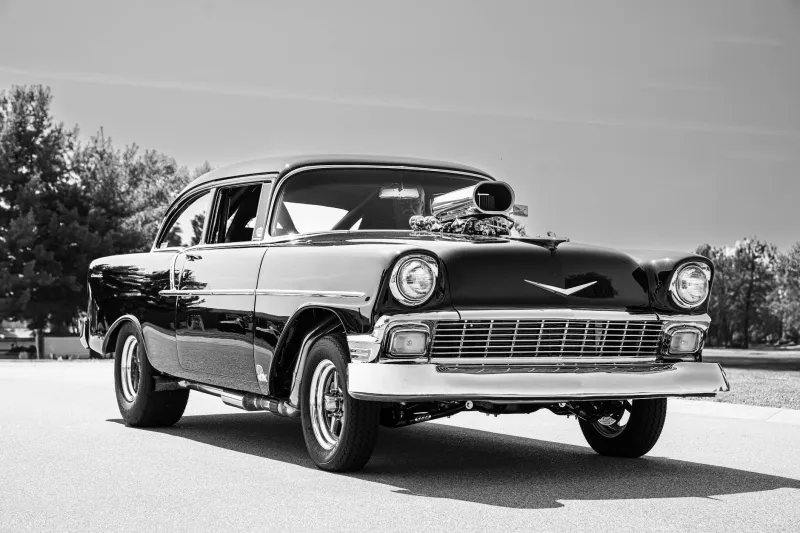
Walk into a Chevrolet dealership in 1955, and you'd find a spanking-new Bel Air sitting on the lot for $1,938. For the average American worker earning around $3,000 annually, that meant a new car represented roughly 65% of a year's gross income. It was expensive, sure, but it was achievable—within reach of a single year's hard work.
The transaction was still a commitment. Families saved. They planned. But the math was straightforward: work for a year, buy a car, drive it for a decade.
Today, that same car—adjusted for inflation—costs around $19,000. The average American household income hovers near $75,000. On the surface, the numbers seem fine. A car costs about 25% of annual income, right? Problem solved.
Except that's not what Americans are actually buying.
The Price Tag Nobody Talks About
The real comparison isn't a base-model sedan. It's what people actually drive off the lot. The median new vehicle price in America today sits around $48,000. For a household earning $75,000, that's 64% of gross annual income—before taxes, insurance, registration, or a single gallon of gas.
That's not progress. That's the gap widening.
When you factor in the actual purchasing power equation—what percentage of your pre-tax earnings disappears into a vehicle—the story becomes harder to ignore. In 1955, after accounting for the difference in wages and inflation, a new car consumed roughly one year of work. In 2024, it consumes nearly four.
The numbers get worse when you examine what economists call the "affordability ratio." In the 1970s, the average new car cost about 40% of median household income. By the 1990s, it had climbed to 50%. Today, depending on which vehicles you're looking at, you're staring at 60–70% of household income for a mid-range new car.
Why Everything Got Expensive at Once
The shift didn't happen overnight, and it wasn't driven by a single cause. Several forces converged to reshape what Americans actually pay for vehicles:
Manufacturing moved offshore. Labor costs in Asia undercut American plants, but that advantage never fully translated to consumer savings. Instead, manufacturers used cheaper overseas production to boost profit margins rather than lower prices.
Features became mandatory. Your 1975 Corolla had an AM radio, four wheels, and an engine. Modern vehicles come loaded with airbags, infotainment systems, emissions controls, and safety features that genuinely save lives but add thousands to the base price. You can't opt out. The safety systems that would've been luxury upgrades forty years ago are now standard.
Trucks and SUVs ate the market. The average vehicle size has grown significantly since the 1970s. Americans shifted away from compact sedans toward larger vehicles that cost more to manufacture and command higher prices. The "affordable car" segment shrank as manufacturers chased higher profit margins on bigger vehicles.
Wage growth stalled. While vehicle prices climbed steadily, wage growth flatlined. Real wages for most American workers haven't meaningfully increased since the 1980s when adjusted for inflation. You're earning roughly what your parents earned in 1985, but cars cost three times as much relative to that income.
The Financing Illusion
Here's where the math gets genuinely unsettling: Americans adapted by financing vehicles for longer periods. In 1985, the average car loan lasted 48 months. Today, it's 68 months. Some buyers stretch into 84-month financing, meaning they're paying for a car for seven years.
This creates an optical illusion of affordability. A $48,000 car spread across 72 months looks manageable as a monthly payment—maybe $700 a month before interest. But you're not actually affording the car. You're extending the purchase across most of a decade, paying interest the entire time, and hoping nothing goes catastrophically wrong before the loan ends.
In 1955, that wasn't how it worked. Most Americans still paid cash or financed over 24–36 months. The car was paid off before it was truly old. Today, you're still making payments as the vehicle edges toward the used-car market.
The Compounding Problem
The affordability crisis doesn't stop at the purchase price. Insurance, registration, maintenance, and fuel create a growing burden. A 1960 car required an oil change, occasional tune-ups, and maybe new spark plugs. Modern vehicles need software updates, dealer-only repairs, and complex maintenance schedules that often require specialized equipment.
That 1955 Chevy? A mechanically-inclined owner could keep it running indefinitely with basic tools and parts that cost a few dollars. Today's vehicles become economically obsolete faster because repairs exceed the vehicle's value, pushing owners into the used market or toward new purchases they can't quite afford.
What Changed, Really
The now gap in car affordability isn't about inflation or the natural march of progress. It's about the relationship between what Americans earn and what they must spend to participate in a car-dependent society.
Your grandparents could buy a new car on one year's salary and drive it for a decade. You're financing a vehicle for six years and hoping you don't need major repairs before the loan matures. That's not a minor shift. It's a fundamental restructuring of household budgets and financial priorities.
The car itself is better—safer, more reliable, more connected. But the cost of entry, measured against what Americans actually earn, has become something previous generations would've found genuinely shocking.
The gap between then and now isn't measured in dollars. It's measured in years of your life.