Free Parking Was Once a Basic Right. Then the Meter Came for Everything.
Free Parking Was Once a Basic Right. Then the Meter Came for Everything.
Somewhere in a mid-century American suburb, a man pulls his Ford into the lot outside a shopping center, steps out, and walks into the store without a second thought. No ticket to grab. No app to open. No rate sign to squint at. No $4 minimum, no surge pricing, no threat of a boot if he stays too long. Parking was just... parking. It came with the territory.
That world didn't vanish overnight. But it did vanish. And the distance between that casual, cost-free assumption and today's reality — where city garages can charge $50 for a few hours and street parking requires a smartphone and a prayer — is one of the more quietly dramatic financial shifts in everyday American life.
How the Car Shaped the American Assumption
After World War II, the United States made a collective bet on the automobile. The GI Bill sent millions of families to the suburbs. The Interstate Highway Act of 1956 stitched the country together with asphalt. And cities, towns, and developers all responded to this new car-centric reality by building parking — enormous amounts of it, most of it free.
Zoning laws in many cities actually required businesses and apartment buildings to provide a minimum number of parking spaces. The idea was simple: if you're going to attract customers or residents, you need to accommodate their cars. Parking wasn't a revenue stream. It was an amenity, like having lights in the hallway.
Shopping malls, which exploded across American suburbs in the 1950s and 60s, were built on seas of free asphalt. The implicit contract was clear: drive here, park here, spend money here. Nobody charged for the parking because the parking was the point. It was how you got people in the door.
Even in cities, parking was often cheap or free by today's standards. Street meters existed — the first one was installed in Oklahoma City in 1935 — but rates were nominal, enforcement was relaxed, and vast stretches of urban America still offered free curbside parking as a matter of course.
When the Meter Started Winning
The shift didn't happen all at once. It crept in through a combination of forces: land values rising in dense urban areas, city budgets looking for new revenue, and a growing recognition among urban planners that free parking wasn't actually free — someone was paying for it, usually in the form of higher prices for everything else.
Economist Donald Shoup's 2005 book The High Cost of Free Parking became something of a landmark text for city planners. His core argument was that minimum parking requirements and subsidized street parking were quietly distorting cities — encouraging sprawl, increasing traffic as drivers circled for cheap spots, and effectively taxing non-drivers to subsidize people who drove. The book gave intellectual ammunition to a movement that was already building: make parking reflect its true cost.
Cities started paying attention. San Francisco launched a program called SFpark in 2011 that used sensors and dynamic pricing to adjust meter rates in real time based on demand. If a block was nearly full, prices went up. If spots were empty, prices dropped. The goal was to keep one or two spots open on every block at all times — reducing the circling that accounts for a surprisingly large share of urban traffic.
Other cities followed with their own versions of demand-based pricing. Chicago sold its entire parking meter system to a private company in 2008 for $1.15 billion — a deal that locked in rate increases for 75 years and became one of the most controversial municipal finance decisions in recent American history. Rates in some Chicago neighborhoods went from a quarter an hour to $6.50 an hour almost overnight.
What Parking Costs Now
The numbers today can be genuinely startling if you haven't parked downtown in a while. In Manhattan, monthly parking garage rates in Midtown regularly run $500 to $700. Daily rates in Boston's financial district can hit $50 before noon. Even in mid-sized cities like Nashville and Denver — places that weren't historically known for parking nightmares — event-day garage rates now regularly reach $30 to $40 for a few hours.
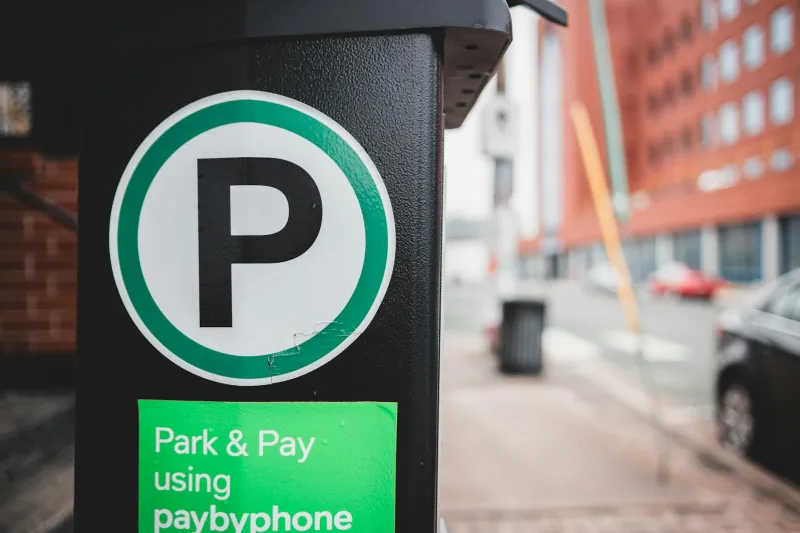
Apps have added a new layer of complexity. SpotHero, ParkWhiz, and similar platforms let drivers reserve and pay for spots in advance, which sounds convenient until you realize you're navigating a yield-management system not unlike airline ticketing — prices fluctuate based on demand, time of day, and how far in advance you book. The same garage spot might cost $8 on a Tuesday afternoon and $35 on a Saturday night.
Some cities have moved to eliminate minimum parking requirements entirely, betting that the market and improved transit will fill the gap. Minneapolis eliminated minimums citywide in 2021. Buffalo, Hartford, and others have followed. The long-term effect on parking availability and cost remains an open question, but the philosophical break from the post-war assumption — that parking must always be provided and ideally free — is complete.
The Invisible Tax You Pay Every Day
What makes the parking story particularly interesting from a financial perspective is how much of the cost is hidden. When a store builds a parking lot, that cost gets folded into overhead and passed along in prices. When a developer is required to build two parking spaces per apartment unit, that cost gets built into rent. Researchers have estimated that "free" parking at a typical office building costs somewhere between $1,000 and $3,000 per space per year to maintain — money that comes from somewhere.
The post-war era didn't eliminate the cost of parking. It just made it invisible, spreading it across everyone whether they drove or not. Today's explicit pricing — the meters, the apps, the garage tickets — at least makes the cost visible. That's arguably more honest. It's also, for anyone who remembers pulling into a shopping center without a second thought, considerably more annoying.
The gap between free-parking America and pay-for-everything America is real, measurable, and still widening. Your grandfather didn't budget for parking. His grandson might spend more on it in a month than on utilities. That's not a small shift. That's the whole ballgame.