A Traffic Stop Used to Cost You Five Bucks — Now It Costs You Forever
When Officer Murphy Knew Your Name
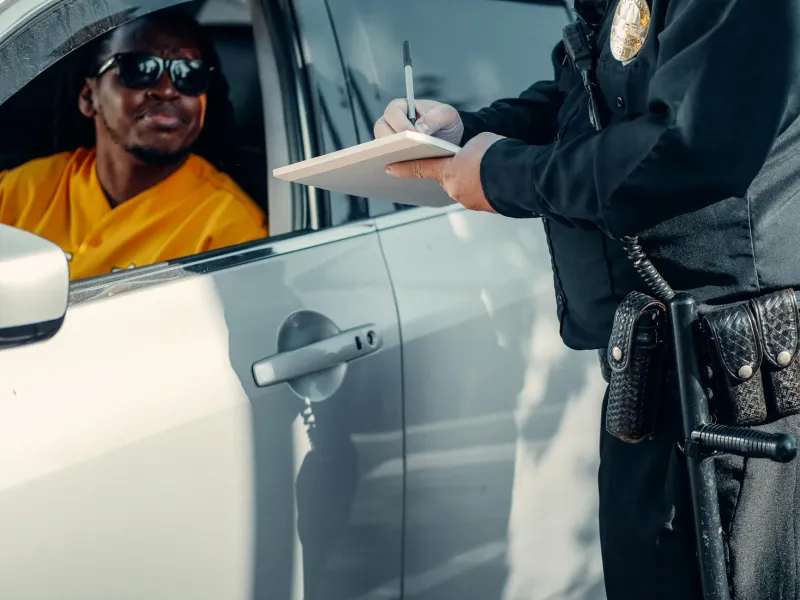
Picture this: It's 1965, and you're cruising through downtown in your Impala when you roll through a stop sign. Officer Murphy, who's been walking this beat for fifteen years, flags you down. He knows your dad from the Rotary Club, recognizes your face from around town, and after a brief chat about how your mother's doing, he hands you a ticket for five dollars. You pay it at the courthouse next week, shake hands with the clerk who went to high school with your sister, and that's the end of it.
No computers. No databases. No insurance companies breathing down your neck. Just a simple transaction between neighbors who understood that everyone makes mistakes.
The Birth of the Point System
Everything changed in the 1970s when states began implementing point systems designed to track repeat offenders. What started as a reasonable way to identify dangerous drivers quickly morphed into something far more complex. Today, a single speeding ticket doesn't just cost you the fine — it triggers a cascade of financial consequences that can last for years.
That $150 speeding ticket? It's actually the cheapest part of your violation. The real hit comes from your insurance company, which will likely raise your rates by 20-30% for the next three to five years. A driver paying $1,200 annually for coverage could see their premium jump to $1,500, meaning that one ticket actually costs them an extra $1,500 over time.
When Cameras Became Cops
The automation revolution reached traffic enforcement in the 1990s with red-light cameras, followed by speed cameras and now license plate readers that can track vehicles across entire metropolitan areas. These systems don't care about your story, your circumstances, or whether Officer Murphy knows your family.
In Washington D.C., speed cameras generated $100 million in revenue in 2022 alone. Chicago's red-light camera program brought in $60 million the same year. What once required a human officer making a judgment call now happens automatically, 24 hours a day, with algorithmic precision that never sleeps and never shows mercy.
 Photo: Washington D.C., via jooinn.com
The Digital Paper Trail That Never Fades
Perhaps the most dramatic change is how violations follow you across state lines and through decades. Modern traffic enforcement systems share data through interstate compacts, meaning a ticket in Florida will affect your insurance rates in Michigan. Background check companies scrape court records and sell them to employers, landlords, and insurance companies.
That speeding ticket from 2015? It's still showing up when potential employers run background checks. The rolling-stop violation from your college years? Your current insurance company knows about it, even though you've moved states twice since then.
The Administrative Fee Revolution
Where a 1960s traffic ticket was a straightforward fine, today's citations come loaded with administrative fees, court costs, and surcharges that can triple the actual penalty. A $75 speeding ticket in California becomes $238 after fees. Miss your court date? Add another $300. Want to attend traffic school to keep points off your record? That's $50 for the course plus $52 in administrative fees.
Some jurisdictions have turned traffic enforcement into a revenue engine. In Ferguson, Missouri, traffic fines and fees generated 23% of the city's total revenue in 2013. Small towns along major highways have become notorious for speed traps that fund entire municipal budgets through out-of-state drivers who'll never return to contest their tickets.
 Photo: Ferguson, Missouri, via townmapsusa.com
When Mistakes Became Permanent Records
The most profound shift isn't financial — it's philosophical. Traffic violations were once treated as minor infractions that good people occasionally committed. Today, they're treated as character defects that predict future behavior.
Insurance companies use sophisticated algorithms that consider not just your violations, but also your credit score, your zip code, and even your shopping habits to calculate risk. A single ticket can mark you as a "high-risk driver" for years, affecting everything from your insurance rates to your ability to rent a car.
The Human Cost of Automation
Lost in this technological revolution is the human element that once characterized traffic enforcement. Officer Murphy could see that you were rushing to the hospital, or that you'd just lost your job, or that you were an otherwise law-abiding citizen having a bad day. Today's automated systems see only violations and revenue opportunities.
The result is a traffic enforcement system that's more efficient, more consistent, and more profitable than ever before. It's also more punitive, more permanent, and more disconnected from the human reality of making mistakes behind the wheel.
That five-dollar handshake with Officer Murphy? It's been replaced by algorithms that never forget and systems that never forgive. Progress, perhaps — but at the cost of the second chances that once defined American justice.