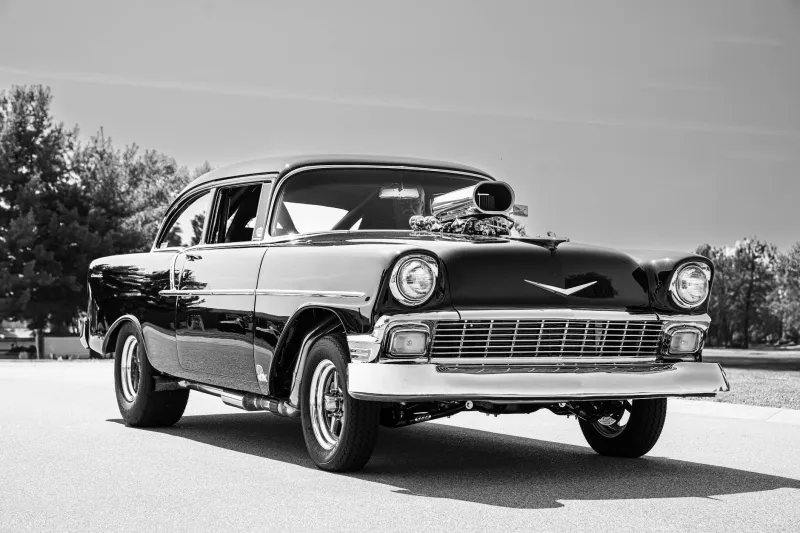
In 1955, buying a car meant walking into First National Bank on Main Street and sitting across from Harold, the loan officer who'd gone to high school with your brother. Harold knew your family had weathered the Depression, that your father worked steady at the plant, and that you'd never missed a payment on anything. The conversation lasted twenty minutes. The handshake sealed the deal.
Today, that same transaction happens in 3.2 seconds. An algorithm digests 200 data points about your financial life, assigns you a three-digit number, and decides whether you deserve that Honda Civic. You'll never meet the decision-maker, because the decision-maker isn't human.
The Golden Age of Personal Banking
Mid-century America ran on relationships. Local banks served local communities, and loan officers actually lived in the neighborhoods where they worked. When you applied for a car loan, the banker considered your character alongside your cash flow. Did you volunteer at the church? Had your family been in town for generations? These "soft factors" mattered as much as your paycheck.
The process was gloriously inefficient. Applications sat on desks for days. Loan officers made house calls to verify employment. Credit checks meant calling three references and hoping they answered the phone. But it worked for middle-class families with steady jobs and community ties.
Interest rates were simple: the bank's rate plus a point or two, depending on how well Harold knew you. No variable rates, no balloon payments, no 84-month terms designed to hide the true cost. You borrowed what you could afford to pay back in three years, maximum.
When Everything Changed
The Fair Isaac Corporation introduced the FICO score in 1989, promising to make lending more objective and fair. Instead of relying on Harold's gut feeling about your character, lenders could use mathematical models to predict your likelihood of default. The score considered payment history, credit utilization, length of credit history, types of credit, and recent inquiries.
Suddenly, your entire financial identity compressed into a number between 300 and 850. Banks loved it. Loan decisions that once took days now happened instantly. Regional banks could compete with national lenders. The mortgage crisis of 2008 turbocharged the trend, as regulators demanded more "objective" lending standards.
The Algorithm Takes Over
Today's car financing resembles high-frequency trading more than old-fashioned banking. Dealerships submit your application to dozens of lenders simultaneously. Algorithms bid against each other for your business in real-time auctions that conclude before you finish signing the paperwork.
The system considers factors Harold never imagined: your smartphone's operating system, the time of day you applied, whether you used all caps in the application, how long you spent on each page of the website. Machine learning models detect patterns in millions of transactions, finding correlations that no human could spot.
Some algorithms favor iPhone users over Android users, reasoning that Apple customers have higher average incomes. Others dock points if you apply late at night, interpreting desperation in your timing. The models are proprietary black boxes, and even the lenders don't fully understand why they approve some applications and reject others.
Winners and Losers in the New System
The algorithmic revolution created clear winners and losers. Young professionals with clean credit histories benefit from instant approvals and competitive rates that Harold might have been too conservative to offer. Immigrants, minorities, and people with thin credit files face systematic disadvantages that well-meaning human loan officers might have overlooked.
Subprime auto lending exploded, targeting borrowers with damaged credit through sophisticated marketing algorithms. These loans carry interest rates of 20% or higher, turning a $15,000 used car into a $30,000 financial burden. The old system's inefficiencies protected people from their worst financial impulses. The new system optimizes for profit extraction.
The Hidden Costs of Efficiency
Modern car loans stretch longer than ever before. The average new car loan now runs 69 months, compared to 36 months in Harold's era. Monthly payments look affordable, but borrowers pay thousands more in total interest. Many owe more than their cars are worth for years after purchase.
Dealership financing adds another layer of complexity Harold never encountered. Dealers mark up interest rates, keeping the difference as profit. They bundle expensive warranties, gap insurance, and extended service contracts into the monthly payment. The financing process that once took twenty minutes now requires two hours of paperwork and upselling.
What We Lost Along the Way
The shift from relationship banking to algorithmic lending reflects broader changes in American society. We gained efficiency and consistency but lost the human element that once made banking personal. Harold might have been biased, but he was also accountable to his community. Algorithms are biased too, but they're accountable to nobody.
The old system wasn't perfect. It excluded many deserving borrowers based on prejudice and limited geographic reach. But it also protected vulnerable consumers from predatory lending and encouraged responsible borrowing habits.
Today's car buyers navigate a system optimized for speed and profit rather than long-term financial health. The algorithm approves your loan in seconds, but you'll spend years discovering whether you could actually afford it. Harold's handshake has been replaced by a digital signature on a contract most people never read.
The gap between then and now isn't just technological—it's fundamentally about trust. We once trusted people. Now we trust math. The question is whether the math trusts us back.