America Built 41,000 Miles of Highway to Replace Its Trains — And Lost the Best Transit System on Earth
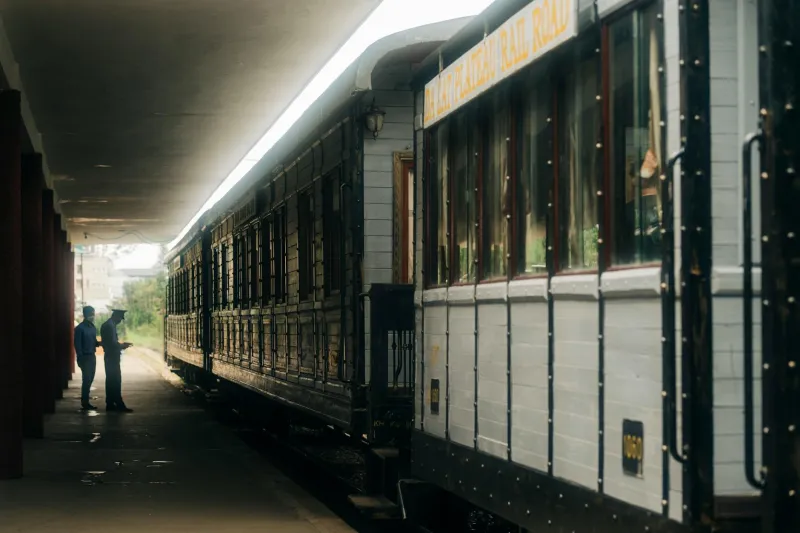
When America Moved by Steel Rails
In 1950, if you wanted to travel from New York to Los Angeles, you had options that would make today's travelers weep with envy. The Super Chief whisked passengers across the continent in 39 hours of air-conditioned luxury, complete with barber shops, observation lounges, and dining cars serving meals that rivaled the finest restaurants. The 20th Century Limited offered overnight service between New York and Chicago so reliable that business meetings were scheduled around its arrival times.
This wasn't just transportation — it was theater. Passengers dressed for dinner, porters attended to every need, and the gentle rhythm of wheels on rails provided a soundtrack for conversations that couldn't happen at 35,000 feet or behind a steering wheel. Railroad stations anchored downtowns like cathedrals, and catching a train felt like participating in something grand and important.
Then Dwight Eisenhower signed a piece of paper that changed everything.
The Signature That Rewired America
The Federal-Aid Highway Act of 1956 didn't just authorize the construction of 41,000 miles of interstate highways. It declared war on every other form of transportation in America. With federal funding covering 90% of construction costs, states rushed to build ribbons of concrete that would make cars king.
The timing couldn't have been worse for railroads. Post-war prosperity meant families could finally afford automobiles, and the new highways promised freedom that trains couldn't match. Why follow someone else's schedule when you could leave whenever you wanted? Why share space with strangers when you could travel in your own private capsule?
Passenger rail ridership, which had already begun declining after World War II, collapsed. The Pennsylvania Railroad, once America's largest corporation, filed for bankruptcy in 1970. The glamorous named trains — the California Zephyr, the Broadway Limited, the City of New Orleans — disappeared one by one, victims of an infrastructure decision that prioritized individual mobility over collective efficiency.
What We Traded Away
The numbers tell a stark story. In 1945, Americans took 770 million trips by passenger train. By 1970, that figure had plummeted to just 289 million. Meanwhile, highway travel exploded from 458 billion vehicle-miles in 1950 to over 1 trillion by 1970.
But the statistics don't capture what we really lost. Train travel in the golden age wasn't just about getting from Point A to Point B — it was about the journey itself. Passengers could work, sleep, socialize, or simply watch America roll by through oversized windows. There were no security lines, no baggage restrictions, and no cramped middle seats at 30,000 feet.
The infrastructure was already there. America had built the world's most extensive passenger rail network over nearly a century, with routes connecting virtually every city and town. European and Japanese visitors marveled at the scope and quality of American trains. We didn't need to invent anything new — we just needed to maintain what we had.
Instead, we chose to abandon it.
The Amtrak Afterthought
By 1971, passenger rail service had deteriorated so badly that Congress created Amtrak as a last-ditch effort to preserve some semblance of intercity train travel. But Amtrak was designed to fail gracefully, not to compete. It inherited the oldest equipment, the worst routes, and a mandate to break even — something no highway or airport has ever been asked to do.
Today's Amtrak serves just 500 destinations compared to the thousands that railroads reached in 1950. Outside the Northeast Corridor, most trains run once per day in each direction, if at all. The journey from New York to Los Angeles now takes 65 hours — nearly twice as long as the Super Chief managed 70 years ago.
Meanwhile, the highways we built to replace trains now choke with traffic that would have been unimaginable in 1956. Americans spend an average of 54 hours per year stuck in traffic, and our car-dependent infrastructure requires constant, expensive maintenance that makes the old railroad subsidies look quaint.
What Other Countries Chose
While America was tearing up its rail network, other developed nations were doubling down on trains. Japan launched the bullet train in 1964, connecting Tokyo and Osaka at speeds that made both cars and planes irrelevant for that route. France followed with the TGV, Germany with the ICE, and Spain with the AVE.
Today, a high-speed train can carry you from Madrid to Barcelona in 2 hours and 30 minutes. The same distance by car takes at least 6 hours. A train from Paris to Lyon covers 292 miles in just over 2 hours, while American trains struggle to maintain 79 mph on most routes.
These countries didn't abandon their highways — they just didn't let highways abandon everything else.
The Gap We Created
The contrast between America's transportation choices and the rest of the developed world has never been starker. While other nations move people efficiently between cities on electric trains powered by increasingly clean grids, Americans remain locked into a system that requires everyone to own a car and burn gasoline for every trip.
We traded the romance and efficiency of rail travel for the supposed freedom of the highway, only to discover that everyone else's freedom creates collective gridlock. The gap between where we could have been and where we ended up represents one of the most consequential infrastructure decisions in American history.
The trains are gone, the stations have become shopping malls, and the right-of-way has been sold to developers. But every time you're stuck in traffic or cramped in an airplane, you're experiencing the long-term consequences of choosing highways over rails. The Interstate Highway System connected American cities, but it disconnected Americans from one of the most civilized ways to travel ever invented.