There Was a Day You Literally Could Not Buy a Car — And the Law Made Sure of It

Photo: David Smith , CC BY-SA 2.0, via Wikimedia Commons
Picture this: It's a Sunday afternoon in 1987. You've spent the week test-driving cars, you've finally made your decision, and you're ready to sign. You drive to the dealership, pull into the lot, and find it completely empty. Not slow — empty. Locked. Dark. A handwritten sign on the door tells you to come back Monday.
Not because the dealer didn't want your money. Because the state said no.
For much of the twentieth century, and well into the twenty-first in some corners of the country, Sunday car sales were flatly illegal across dozens of American states. These weren't informal customs or dealership preferences. They were codified laws, enforceable by fine, with real teeth. And they shaped the entire calendar of automotive retail in ways that most buyers never stopped to question.
Where Blue Laws Came From
Blue laws — regulations restricting commerce or activity on Sundays — have roots in colonial-era America, originally tied to religious observance and the idea that Sunday should be reserved for church and rest rather than commerce. As the country industrialized, these laws evolved and fragmented, with states and municipalities enforcing wildly different versions depending on local culture and political pressure.
By the mid-twentieth century, most general retail had successfully pushed back against Sunday restrictions. Department stores opened. Grocery stores ran Sunday specials. But car dealerships remained a notable exception in many states, held in place by a combination of genuine religious tradition and something considerably less spiritual: dealer lobbying.
Here's the part that often surprises people. Dealers themselves were frequently among the strongest advocates for keeping Sunday closure laws on the books. The reasoning was straightforward: if everyone is closed, no single dealer loses a competitive edge by being closed. A mandated day off relieved pressure on sales staff, reduced operating costs, and eliminated the anxiety of a competitor poaching your Sunday shoppers. The law, in many cases, was doing the industry a favor it was happy to accept.
The States That Held On Longest
At the peak of Sunday car sale restrictions in the mid-twentieth century, more than half of U.S. states had laws limiting or outright banning the practice. The specifics varied considerably. Some states banned sales entirely. Others prohibited the sale of new cars but allowed used vehicle transactions. A few restricted only certain counties while neighboring counties remained open.
Colorado, for instance, maintained its Sunday car sales ban until 2012 — well into the smartphone era. Illinois had restrictions that lingered until 2008. Louisiana kept its Sunday closure rules for years while nearby Mississippi operated freely. The patchwork created genuinely strange border-town dynamics where buyers in one county could purchase a vehicle on Sunday while residents twenty minutes away could not.
As of 2024, a handful of states still maintain some form of restriction. Illinois eliminated its ban relatively recently. Louisiana and New Jersey have historically been among the most persistent holdouts, with New Jersey's restrictions remaining particularly notable given its proximity to New York City's enormous consumer market. Dealers in some New Jersey markets have operated under Sunday closure rules while competitors just across state lines ran full weekend operations.
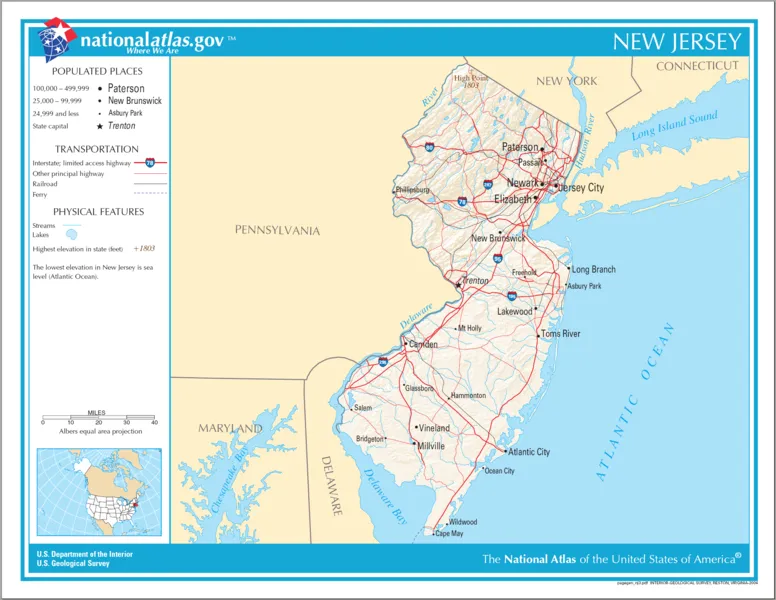 Photo: New Jersey, via www.ducksters.com
What It Actually Felt Like for Buyers
For consumers, the Sunday closure dynamic created a weekly rhythm that's almost impossible to imagine in the current landscape. Weekend car shopping meant Saturday was your window. If you hadn't made a decision by closing time Saturday afternoon, you were waiting until Monday — assuming you could take time off work, which many buyers couldn't.
This compressed the most emotionally charged part of the purchase decision into a single day. Dealers understood this. A buyer who showed up on a Saturday afternoon knowing they couldn't come back until Monday was, in a meaningful sense, a more captive audience than a buyer with unlimited time. The artificial scarcity of the open sales day wasn't entirely bad for dealerships, even when they claimed otherwise.
The flip side was that buyers who needed more time to think, who wanted to sleep on a decision, who felt pressured by a Saturday close — they had nowhere to go. The law removed the option of returning Sunday morning with a clearer head and a counteroffer.
The Internet Made the Whole Concept Obsolete
The rise of online car buying hasn't just inconvenienced Sunday closure laws — it's made them philosophically incoherent.
Carvana, which launched in 2012, built its entire model around the idea that vehicle transactions should be available at any hour, any day, with no physical location required. You can complete a Carvana purchase at 2 a.m. on a Sunday in a state that technically still restricts dealership sales. The law was written for a world of physical lots and handshake deals. It had no framework for a website that never closes.
Traditional dealers have responded by expanding their own digital capabilities. Most major franchise dealerships now allow customers to complete significant portions of the purchase process — credit applications, trade-in valuations, financing comparisons, contract review — entirely online, with physical delivery as the only remaining step. In some markets, even that step can be handled through home delivery services.
The consumer expectation has been completely inverted. A generation ago, buyers accepted that certain days were simply off the table for car purchases, because the law said so and there was no workaround. Today, the idea of a purchase process that isn't available around the clock feels like a business model from another century.
The Gap Is Bigger Than It Looks
The distance between a locked dealership lot on a 1987 Sunday and a 2024 buyer finalizing a purchase on their phone during halftime isn't just technological. It's a fundamental shift in who controls the transaction.
Blue laws, whatever their original intent, placed the terms of commerce in the hands of the state and the seller. The buyer worked around the calendar that was handed to them. The digital transformation of car retail has moved that power — slowly, imperfectly, but genuinely — toward the buyer.
You can still find states with Sunday restrictions on the books. But you can also find a car, get approved for financing, and schedule a delivery without ever speaking to a salesperson or checking what day of the week it is.
The law that once told you when you were allowed to buy a car has never looked more like a relic.