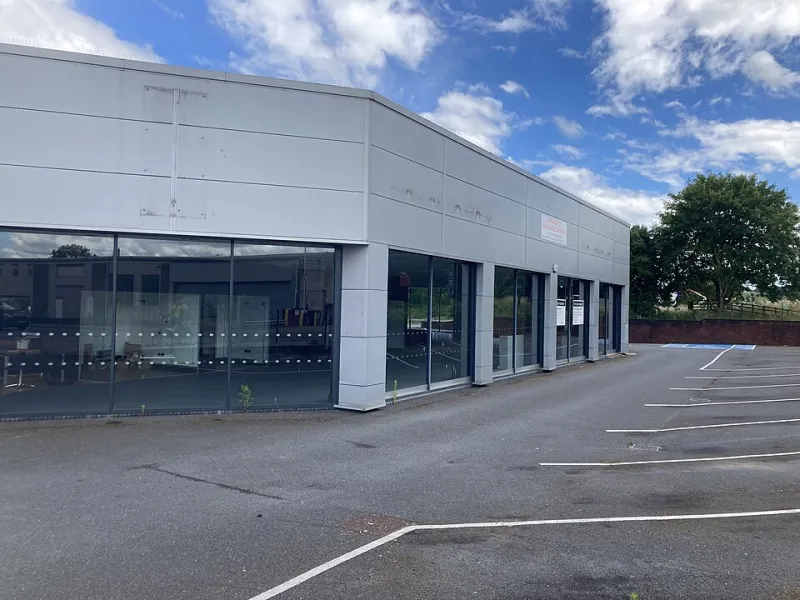
He Used to Be the Most Important Man at the Dealership. Now He's Losing Ground to a Website.

He Used to Be the Most Important Man at the Dealership. Now He's Losing Ground to a Website.
There was a time — not ancient history, just a few decades back — when the car salesman was one of the most consequential people in your town. Not consequential in a grand, civic way. Consequential in the way that mattered to ordinary Americans: he could get you into a car, or he couldn't. He could work the numbers, or he wouldn't. He knew what was on the lot before it hit the lot, and if you had a relationship with him, that knowledge was worth something real.
That era is over. And the way it ended tells you a lot about how American commerce changed.
The Golden Age of the Floor Guy
In the postwar decades — roughly the 1950s through the 1970s — the car salesman occupied a genuinely powerful position in the retail ecosystem. Automakers produced vehicles in relatively limited configurations. Information about pricing, inventory, and competitive alternatives was scarce and asymmetric: the salesman knew far more than the customer, and that knowledge gap was the foundation of his livelihood.
But it wasn't purely about information control. The best salesmen of that era were genuinely knowledgeable. They understood the mechanical differences between a six-cylinder and a V8. They knew which trim packages held their value and which ones were dealer-margin plays. They remembered what you drove last time, what your wife preferred, how many kids you had, and whether you cared more about monthly payments or the total price.
In smaller cities and towns, the dealership was a community institution, and the top salesman was its public face. He sponsored Little League teams. He attended the same church as his customers. He played poker with the bank manager who approved his customers' loans. These weren't incidental relationships — they were the infrastructure of the sale. Trust, in the mid-century American car business, was personal.
And critically, the salesman had authority. He could negotiate. He could throw in floor mats, knock a few hundred dollars off the sticker, or push through a deal that the finance department was skeptical about. The transaction happened between two humans in real time, and the salesman's judgment shaped the outcome.
The First Cracks: Manufacturer Control
The erosion began quietly, and it started with the manufacturers themselves.
As automakers grew through the 1970s and '80s, they became increasingly uncomfortable with the variability of the dealership model. Every dealer negotiating independently meant inconsistent customer experiences, unpredictable margins, and brand equity that was harder to control. Manufacturers began introducing more standardized pricing structures, factory invoice transparency programs, and eventually certified pre-owned schemes that took some of the negotiating theater out of used car sales.
The salesman's authority didn't disappear overnight. But it narrowed. Where he once had genuine latitude, he increasingly had a playbook. Where he once could cut a deal based on instinct and relationship, he now had to run the numbers past a finance manager who ran them past a desk manager who was watching manufacturer incentive structures that changed monthly.
The job became more procedural. The craft thinned out.
The Internet Did the Rest
When Kelley Blue Book went online in the late 1990s and sites like Edmunds began publishing dealer invoice prices, the information asymmetry that had underpinned the salesman's power simply evaporated.
 Photo: Kelley Blue Book, via mma.prnewswire.com
Suddenly, the customer sitting across the desk knew what the dealer had paid for the car. They knew what competitors were charging within fifty miles. They'd read forum threads from other buyers describing exactly which tactics the dealership was likely to use — the four-square worksheet, the payment-focused negotiation, the mysterious documentation fee that appeared at signing. The playbook that salesmen had used for decades was now publicly available to anyone with a dial-up connection.
Dealerships adapted, awkwardly. Some embraced a "no-haggle" model, essentially conceding that the negotiation game was over. Others doubled down on complexity — adding more fees, more add-ons, more finance office products — to recover margins that the sticker price no longer protected. The salesman's role shifted again: less expert guide, more process manager. His job became less about selling the car and more about moving the customer through a sequence of steps designed to maximize revenue at each stage.
Customer satisfaction scores fell. Trust in dealerships, never especially high, declined further. The salesman who'd once been a community anchor was increasingly seen as an obstacle between the customer and the car they'd already researched, selected, and priced before walking through the door.
Then Tesla Walked In and Changed the Question Entirely
For all the disruption the internet caused, it still operated within the dealership model. Customers researched online but still had to show up in person to buy. The dealership — and the salesman — remained a mandatory stop.
Tesla changed that. By selling directly to consumers, bypassing the franchise dealership system entirely, Tesla didn't just threaten the car salesman's commission — it threatened his existence. You couldn't walk into a Tesla store and negotiate. There was no salesman to negotiate with. The price was the price. The transaction happened largely online. The "sales associate" in the showroom was closer to an Apple Store employee than a traditional car salesman — knowledgeable about the product, but without any authority over pricing.
 Photo: Apple Store, via www.e-architect.com
Other EV startups — Rivian, Lucid, Polestar — followed the same model. Legacy automakers, constrained by franchise laws that protect their existing dealer networks, watched enviously and began exploring ways to move toward fixed-price, direct-to-consumer models without triggering the legal battles that would follow.
The franchise dealer lobby has fought back hard, and in many states, direct sales remain legally restricted. But the direction of travel is clear. The question is no longer whether the traditional dealership model will change — it's how fast.
What the Decline Really Means
The story of the American car salesman isn't simply a retail story. It's a story about what happens when personal relationships, local knowledge, and human judgment get systematically replaced by information systems, standardized processes, and algorithmic pricing.
In some ways, the customer won. Prices are more transparent. Manipulation is harder. The information gap that salesmen exploited for decades has largely closed. These are genuine improvements.
But something quieter was lost too. The salesman who knew your family, who'd sold your father his first car, who understood that you needed something reliable more than something impressive — that person carried a kind of contextual intelligence that a configurator on a manufacturer's website doesn't replicate.
He wasn't always honest. The profession's reputation for slipperiness was earned over decades of legitimate grievance. But at his best, he was something that no algorithm has yet managed to become: someone who actually knew you.
The now gap here is wide. And it's still growing.