The Engine Your Grandfather Rebuilt Is Now a Black Box Your Teenager Can't Open
Somewhere in America right now, there is a garage with a pegboard wall covered in hand-painted tool outlines — each wrench and socket hanging exactly where it belongs. The concrete floor has oil stains that go back forty years. And the guy who built that garage spent entire weekends under the hood of his car, learning its mechanical language the way you learn a second language: slowly, through repetition, through mistakes, through the deeply satisfying moment when something finally works.
His grandson drives a 2022 crossover with 47 onboard computers and has never opened the hood. Not once.
That's the gap. And it's bigger than a generation.
When the Car Was Something You Understood
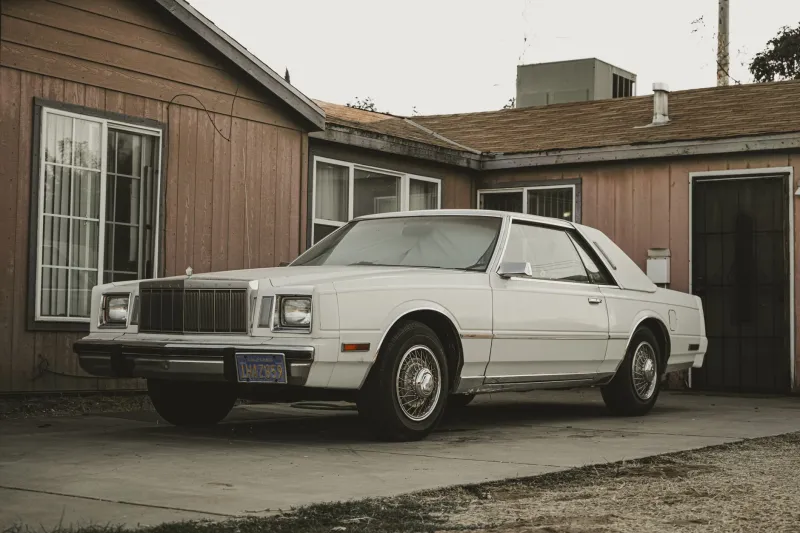
Vehicles built before the mid-1980s were, by modern standards, mechanically transparent. They had carburetors you could take apart on a kitchen table. Distributors with points you could adjust with a feeler gauge. Drum brakes you could resurface yourself with a rented lathe. The mechanical logic was visible, accessible, and learnable by anyone willing to buy a Chilton manual and spend a Saturday afternoon getting dirty.
This wasn't just a hobbyist thing. Ordinary Americans maintained their own vehicles out of practical necessity. Labor at dealerships was expensive. Parts stores like NAPA and Pep Boys existed specifically to serve the home mechanic. Knowing how to do a tune-up — plugs, wires, cap, rotor, maybe adjust the timing — was a life skill passed from fathers to sons and, increasingly, daughters. It was as normal as knowing how to change a fuse.
The car wasn't just transportation. It was a mechanical system you were expected to have a working relationship with.
The Moment the Hood Closed
The shift began gradually in the mid-1980s and accelerated sharply through the 1990s. Fuel injection replaced carburetors. Electronic ignition made distributors obsolete. Onboard diagnostic systems arrived — first OBD-I, then the standardized OBD-II in 1996 — creating a machine-readable layer between the driver and the engine that required a computer to interpret.
Each of these changes delivered real benefits. Fuel injection made engines more efficient and reliable. Electronic controls improved emissions and performance. Modern vehicles are dramatically more dependable than anything built in 1975 — the average car on American roads today is over 12 years old, a figure that would have seemed impossible in the era of the tune-up.
But reliability came with a cost that's rarely stated directly: the car became a closed system. Not just technically complex, but deliberately inaccessible to anyone without the right equipment and the right credentials.
Proprietary Tools and the Dealer Monopoly
Here's where it gets genuinely frustrating.
Modern vehicles don't just require technical knowledge to repair — they require proprietary software that only authorized dealers typically possess. Replacing a battery in certain BMWs requires registering the new battery with the car's computer. Swapping a steering column on a late-model GM vehicle might require a dealer to reprogram the key fobs. Some manufacturers have designed their diagnostic systems to actively resist third-party tools.
This isn't incidental. It's a business model. Dealer service departments are profit centers, and keeping repair work inside the authorized network is enormously valuable to manufacturers. The Right to Repair movement — which has gained legislative traction in Massachusetts and is being debated at the federal level — exists precisely because automakers have created a landscape where independent mechanics and home hobbyists are systematically locked out.
The result is a two-tiered reality: people who can afford dealer service rates, and people who can't and are stuck paying them anyway because there's no alternative.
A Generation With No Feel for the Machine
The cultural loss here runs deeper than economics.
There was something genuinely valuable about growing up with mechanical literacy. Understanding that a car is a system — that fuel and air mix in a specific ratio, that heat expands metal, that friction has consequences — gave people a different relationship with the physical world. It built problem-solving confidence. It created a sense of self-reliance that extended beyond the garage.
Surveys consistently show that younger Americans are less likely to know basic vehicle maintenance tasks than any previous generation. A significant portion of drivers under 35 have never checked their own oil, don't know how to jump-start a car, and couldn't tell you what a serpentine belt does. This isn't laziness — it's a rational response to a system that has made self-sufficiency nearly impossible and quietly trained people to outsource everything.
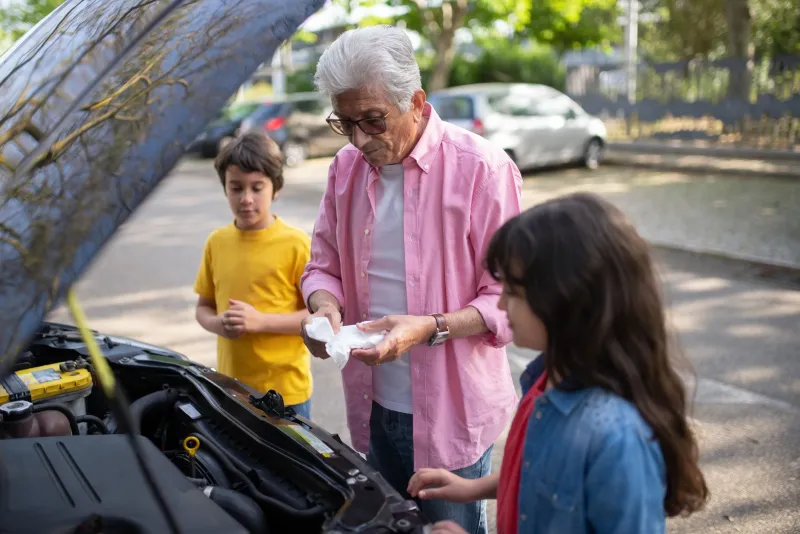
When the check engine light comes on, the modern response is to Google the nearest dealership, not to pop the hood. Because popping the hood reveals a plastic engine cover hiding the components underneath — a design choice that is, in its own way, a message: this is not for you to touch.
The Rise of the Mobile Mechanic
Something interesting has emerged in the gap left by DIY culture's decline: the mobile mechanic.
Services like Wrench and YourMechanic send certified technicians to your driveway, often for less than dealer rates. It's a gig economy solution to the dealer monopoly problem, and it's grown significantly over the past decade. In some ways, it's a digital-era echo of the old neighborhood mechanic — someone who comes to you, who works on your car in your space, who treats the repair as a personal transaction rather than a service ticket.
It's not the same as doing it yourself. But it's a recognition that the dealership model isn't the only answer, and that there's real demand for accessible, human-scale car repair.
What's Actually at Stake
The death of driveway mechanical culture isn't just nostalgia. It represents a meaningful shift in the relationship between Americans and the machines they depend on — a shift from ownership and understanding to dependency and subscription.
Your grandfather didn't just own his car. He knew it. He could diagnose it by sound, feel a problem through the steering wheel, smell something wrong before it became expensive. That knowledge made him less vulnerable — to repair costs, to being told something was wrong when it wasn't, to the general helplessness of not understanding the thing you rely on every day.
The modern driver sits inside a sophisticated appliance and hopes the warning lights stay off.
The gap between those two relationships — between the guy with grease under his fingernails and the person who schedules a diagnostic appointment — isn't just about cars. It's about what kind of relationship we have with the physical world, and how much of that relationship we've quietly agreed to give up.