Your Mechanic Used to Understand Your Car. Now It Understands Itself Better Than He Does.
When a Mechanic Was a Mechanic
In 1975, the best mechanics were people who understood machinery through touch and sound. They could listen to an engine and hear a problem. They could feel a transmission hesitation and know whether it was a worn clutch or a slipping band. They could crawl under a car, inspect the suspension, and diagnose wear patterns from visual inspection alone.
These weren't specialists. They were generalists. A neighborhood mechanic could work on any American car from the 1960s through the 1980s because the fundamental engineering was comprehensible. An engine was an engine. A transmission was a transmission. The systems were mechanical, not electronic. They could be understood, disassembled, repaired, and reassembled by someone with mechanical aptitude and experience.
A confident DIY owner with a weekend, basic tools, and a Haynes manual could rebuild an entire engine in their driveway. Not safely, not quickly, but it was possible. The knowledge was accessible. The parts were affordable. The work was hard but not impossible.
That era created a relationship between Americans and their cars that's almost unimaginable now. You didn't just own a car; you understood it. You could fix it. You could modify it. The hood wasn't a barrier—it was an invitation.
The Computers Arrived Quietly
The shift didn't happen overnight, and it didn't announce itself. The first computer-controlled fuel injection systems arrived in the 1980s, and they seemed like a minor upgrade. Electronic ignition, oxygen sensors, emissions control systems—all improvements that made cars more efficient and reliable.
Mechanics adapted. The new systems were still understandable. You could still diagnose problems, still make repairs. The computers were assistants, not replacements.
But the complexity compounded year after year. By the 1990s, a modern car had dozens of computers working in concert. By the 2000s, it had hundreds of sensors feeding data to multiple integrated systems. By the 2010s, the vehicle itself became a rolling computer that happened to have wheels.
Today's vehicles aren't machines with computers in them. They're computers that move.
The Black Box Under the Hood
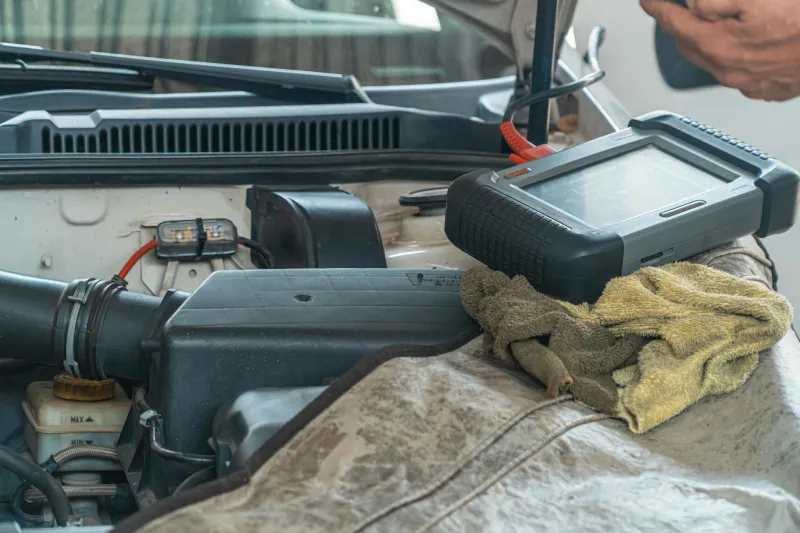
When something goes wrong with a modern car, the first step isn't diagnosis—it's downloading data. A mechanic connects a diagnostic scanner to the vehicle's onboard computer and reads the error codes. Those codes point to a system, not a problem. The actual issue might be any of a dozen components feeding into that system.
Finding out which one requires specialized training, manufacturer-specific software, and often, dealer access to proprietary information that independent shops don't have.
A check engine light that once meant "something's wrong with the emissions system" now requires a computer to even begin understanding what the car is trying to tell you. The scanner itself costs thousands of dollars. The software to interpret the data costs more. The training to understand what the data means costs even more.
An independent mechanic running a shop in a small town can't afford to stay current. They can't purchase the diagnostic equipment for every manufacturer. They can't access the proprietary software. They can't get training on every new system that appears in every new model year.
So they do what they can: basic maintenance, oil changes, brake work, tire service. Anything beyond that increasingly requires a dealer visit.
The Manufacturer Lock-In
Manufacturers have deliberately made their vehicles harder to repair outside the dealer network. It's not accidental. It's strategy.
When you own a modern car, you don't actually own the software running the engine. You license it from the manufacturer. That licensing agreement often includes restrictions on who can modify, repair, or even access that software. Independent mechanics who try to repair modern vehicles often hit digital locks that prevent them from doing the work.
Electric vehicles have accelerated this trend dramatically. An EV's battery management system is software. The motor controller is software. The charging system is software. A mechanic can't repair these systems the way they repaired a traditional engine. They can only replace components—and those components are expensive and often proprietary.
Tire pressure monitoring systems that malfunction? The sensor often can't be reset without dealer equipment. A transmission that needs recalibration? That requires a dealer connection. A software update that's essential for the car to function properly? Many manufacturers only allow dealers to install those updates.
The result is a system where the manufacturer controls access to repair. Independent mechanics are locked out. DIY owners are locked out. The car itself becomes a black box that only the manufacturer understands.
The Knowledge Gap
This has created a strange inversion: the car understands itself better than anyone else does.
A modern vehicle's onboard computer knows its own maintenance history, fuel consumption patterns, driving habits, and component wear. It predicts failures before they happen. It sends telemetry data to the manufacturer. It knows more about its own condition than any human mechanic ever will.
But that knowledge is locked inside the vehicle. The driver can't access it fully. The mechanic can't access it without the manufacturer's permission. The manufacturer controls the information.
Meanwhile, the knowledge that mechanics once possessed—the ability to diagnose by sound and feel, to understand the fundamental engineering of a vehicle, to make repairs without specialized equipment—has become almost irrelevant. A mechanic who can listen to an engine and hear a problem is useless if the problem is in the software.
What Was Lost
The shift from mechanical to digital has real consequences for car owners.
Repair costs have exploded. A transmission that once cost $800 to rebuild might now cost $4,000 to replace because the manufacturer doesn't sell the components separately. A sensor that costs $15 to replace might require $200 in labor because only a dealer can do it.
Vehicles are harder to keep running long-term. An older car with basic mechanical systems can run for decades with proper maintenance. A modern car becomes economically obsolete faster because repairs become prohibitively expensive and the manufacturer stops supporting software updates.
The right to repair has become a real issue. Farmers can't fix their own tractors because of software locks. Car owners can't take their vehicles to independent shops because of proprietary restrictions. The ability to own and maintain something you've purchased is increasingly limited by digital controls.
The relationship between owner and vehicle has changed. You no longer own your car in the way previous generations did. You lease the software, rent the manufacturer's ecosystem, and pay for access to repairs.
The Now Gap in Understanding
A 1975 mechanic could understand a 1975 car. Every system was comprehensible to someone with mechanical training. The knowledge wasn't hidden. The parts were accessible. The repairs were possible.
A 2024 mechanic can't fully understand a 2024 car. The systems are too complex. The knowledge is proprietary. The repairs are controlled by the manufacturer. The mechanic is a technician, not an engineer—someone who follows procedures rather than understands principles.
A DIY owner in 1975 could rebuild an engine with basic tools and time. A DIY owner in 2024 can change the oil if they're careful not to trigger any sensors. That's the gap.
It's not that cars are worse—they're more reliable, more efficient, and safer than ever. But the cost of that progress is accessibility. The hood is still there, but what's underneath has become foreign territory.
Your grandfather could fix his car. You can't. That's not progress in the way we usually think about it. It's a trade-off, and the gap between what was lost and what was gained is wider than most drivers ever stop to consider.