Nobody Buckled Up — And the Death Toll Was Staggering
Nobody Buckled Up — And the Death Toll Was Staggering
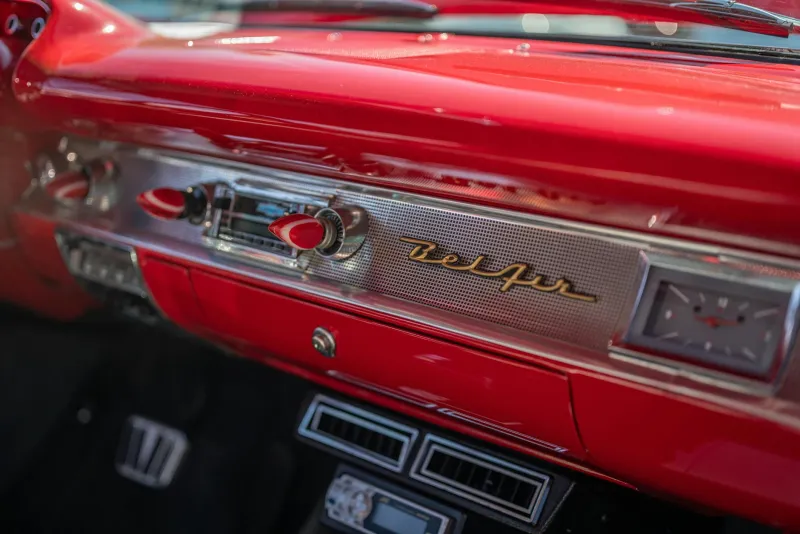
Picture this: It's 1958. You slide into the front seat of a gleaming Chevrolet Bel Air, the radio crackles to life, and you pull out of the driveway without a single thought about a seatbelt. Not because you forgot. Because there wasn't one. And honestly? Nobody around you thought that was a problem.
That's the thing about the now gap when it comes to car safety. It's not just that the technology was different. The entire mindset was different. Driving was freedom. Danger was just part of the deal.
The Car as a Chrome-Plated Deathtrap
By modern standards, cars of the 1950s were astonishingly dangerous — and not in subtle ways. Steering columns were rigid metal spears aimed directly at the driver's chest. Dashboards were hard, unpadded surfaces at exactly the wrong height. Windshields were made from glass that shattered into large, jagged shards rather than the laminated safety glass we use today. There were no headrests, no padded interiors, and no crumple zones designed to absorb impact energy before it reached the people inside.
The numbers tell the story. In 1972, at the peak of American driving fatalities, roughly 54,589 people died on U.S. roads in a single year. To put that in perspective, that's more Americans killed on the highway in twelve months than died during the entire Vietnam War. And the U.S. had far fewer registered vehicles then than it does today.
By 2022, despite vastly more cars on the road and far more miles driven annually, traffic deaths had fallen to around 42,795 — still far too many, but a dramatically different story when you account for the scale of modern driving. Adjust for miles traveled, and you're looking at a fatality rate that has dropped by more than 80 percent since the early 1970s.
Something clearly changed. Several things, actually.
When Seatbelts Were Optional — And Resisted
Seatbelts weren't invented in the 1970s. They existed. Some manufacturers offered them as optional add-ons in the mid-1950s, and a handful of safety advocates were loudly insisting they should be standard equipment. The problem wasn't the technology. It was the culture.
Car companies actively pushed back against mandatory safety features for years, worried that talking about danger would scare customers away from buying. The industry's unofficial position was essentially: if you have to tell people cars can kill them, they might not want to buy one. Ford briefly tried marketing safety features in 1956 — padded dashboards, seatbelts, a safer rearview mirror — and the campaign flopped. Rival automakers used it as proof that safety didn't sell.
Drivers weren't exactly demanding change either. The prevailing attitude was that serious accidents happened to other people, or to bad drivers. Buckling up felt unnecessary, fussy, even unmanly to some. Right up into the 1980s, seatbelt use in the U.S. hovered somewhere around 10 to 15 percent even in states where belts were technically available.
It took Ralph Nader's 1965 book Unsafe at Any Speed — a scathing takedown of the auto industry's indifference to safety — and subsequent congressional pressure to force the issue. Federal standards requiring seatbelts in all new cars took effect in 1968. But having a belt in the car and actually wearing it were two very different things.
The Law Had to Step In
New York became the first state to require drivers and passengers to actually buckle up in 1984. Other states followed slowly, and the battles were fierce. Opponents called it government overreach. Radio hosts railed against it. Some people cut their seatbelts out in protest.
Today, 49 states have primary seatbelt laws — meaning officers can pull you over just for not wearing one. Nationwide belt use now sits above 90 percent. That shift alone, safety researchers estimate, saves tens of thousands of lives every year.
And seatbelts were just the beginning. Airbags became federally mandated in the 1990s. Antilock brakes went from exotic luxury-car technology to standard equipment. Crumple zones — sections of a car's body engineered to collapse in a controlled way during a crash, absorbing energy before it reaches the occupants — became a core part of vehicle design rather than an afterthought.
Modern crash tests are almost incomprehensibly rigorous compared to anything that existed before the 1970s. The Insurance Institute for Highway Safety now runs a test called the small overlap frontal crash, which simulates hitting a telephone pole or another vehicle at an offset angle — exactly the kind of scenario that used to kill people routinely. A car that fails it doesn't get recommended. A car from 1958 would simply cease to exist.
The Gap Nobody Talks About
Here's what makes the safety story so striking: most of this progress happened quietly, incrementally, buried in regulatory documents and engineering specs. Nobody held a parade when the third-generation airbag rolled out. There was no cultural moment when crumple zones became universal.
But the cumulative effect is extraordinary. If today's fatality rate per mile driven had been in place during 1972, somewhere around 500,000 fewer Americans would have died on the road in the decades since. That's not a rounding error. That's a city.
Your grandfather climbed into his Bel Air without a second thought. His car was beautiful, powerful, and built with almost no consideration for what happened to the people inside it during a crash. We look at those vehicles now and see rolling sculpture. What we sometimes forget is that they were also rolling gambles — and the house won far too often.
The gap between then and now isn't just measured in airbags and crumple zones. It's measured in the people who made it home.