When Two Wagons Made a Traffic Jam — Now Americans Waste 54 Hours a Year in Gridlock Hell
When Two Wagons Made a Traffic Jam — Now Americans Waste 54 Hours a Year in Gridlock Hell
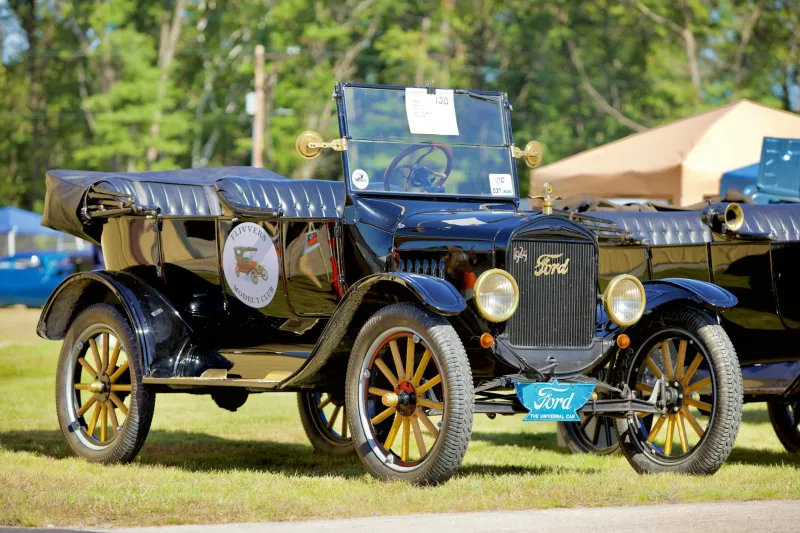
Picture this: It's 1915, and you're cruising down a dirt road in your brand-new Model T Ford. Suddenly, up ahead, you spot something remarkable — another automobile! And behind it, a horse-drawn wagon moving at the speed of, well, a horse. You've just encountered what passes for a traffic jam in early 20th century America.
Back then, such a "congestion crisis" might last all of three minutes. Today, Americans collectively waste 8.8 billion hours annually sitting in traffic, losing an average of 54 hours per person to gridlock. That's more than a full work week spent going absolutely nowhere.
The Open Road That Actually Was Open
In 1920, America had roughly 8 million registered vehicles sharing the roads with horses, bicycles, and the occasional pedestrian brave enough to venture beyond the sidewalk. With a population of 106 million, that meant one car for every 13 people. Most roads were dirt or gravel, city streets were narrow, and the concept of a "rush hour" didn't exist because most people walked to work or took streetcars.
Traffic lights? Those were still a novelty. The first electric traffic signal had only been installed in Cleveland in 1914, and most intersections relied on police officers with hand signals or simple stop signs. Getting stuck behind a slow-moving vehicle was genuinely unusual enough to be the topic of dinner conversation.
Compare that to today's reality: America now has over 270 million registered vehicles serving a population of 330 million. That's roughly four cars for every five people, all trying to navigate an infrastructure that was never designed for this volume.
How Freedom Became a Parking Lot
The irony is staggering. The automobile was supposed to liberate Americans from the constraints of fixed train schedules and crowded streetcars. Henry Ford promised personal mobility, the freedom to go anywhere at any time. For a brief, shining moment in the 1920s and 1930s, that promise seemed real.
But as car ownership exploded after World War II, something unexpected happened. The very infrastructure built to accommodate automobiles began working against them. Cities demolished their streetcar lines and ripped up trolley tracks to make room for cars and buses. Suburban developments sprawled outward, connected only by roads that funneled everyone toward the same downtown destinations at the same times.
By the 1960s, the morning and evening "rush hours" had become permanent fixtures of American life. What started as a 30-minute window of slightly heavier traffic stretched into multi-hour slogs. The car that was supposed to give you freedom had created a new kind of prison.
The Hidden Cost of Sitting Still
Today's traffic numbers are genuinely mind-boggling. The average American commuter doesn't just lose 54 hours to traffic annually — they lose $1,377 in wasted time and fuel costs. In major metropolitan areas like Los Angeles, New York, and San Francisco, drivers can lose over 80 hours per year to congestion.
That's not counting the psychological toll. Studies show that commuting in heavy traffic increases stress hormones, reduces job satisfaction, and even shortens lifespans. The daily gridlock that millions of Americans accept as normal would have seemed like a dystopian nightmare to drivers from a century ago.
Consider this: In 1920, if you encountered a traffic delay, it was probably because a farmer was herding cattle across the road or someone's Model T had broken down (which happened frequently). These delays were temporary, often community events where neighbors helped push cars or clear obstacles.
Today's traffic jams are different beasts entirely. They're predictable, systematic, and seemingly permanent. Interstate 405 in Los Angeles moves at an average speed of 15 mph during rush hour — slower than horses traveled in 1920.
The Suburban Sprawl Trap
The transformation didn't happen overnight. As Americans embraced suburban living in the post-war boom, they unknowingly created a transportation paradox. Suburbs required cars for everything — grocery shopping, getting to work, taking kids to school. This car dependency led to wider roads, bigger parking lots, and cities designed around vehicles rather than people.
But all those suburban commuters still needed to get to jobs concentrated in urban centers. The result? Massive highway systems that become clogged arteries twice daily as millions of people make the same journey at the same time.
Urban planners in the early automobile era couldn't have predicted this. They saw cars as the solution to crowded cities, not the creator of a new kind of crowding that would trap people in metal boxes for hours each day.
When Progress Became Paralysis
The most striking difference between then and now isn't just the number of cars — it's the relationship between driver and vehicle. In 1920, owning a car meant adventure, spontaneity, and genuine mobility. Roads were largely empty, destinations were flexible, and the journey itself was often the point.
Today, for millions of Americans, their car has become a familiar prison cell. They know exactly how long their commute takes, which lanes move fastest, and where the bottlenecks occur. The adventure has been replaced by predictable frustration.
The gap between automotive promise and automotive reality has never been wider. We have faster, safer, more comfortable cars than ever before, but we're using them to sit motionless on highways, burning fuel and time in equal measure.
The next time you're stuck in traffic, remember: a century ago, what you're experiencing would have been unimaginable. Two horse carts blocking a dirt road was once the extent of America's traffic problems. Now we've managed to turn the open road into the world's most expensive parking lot — and somehow convinced ourselves this is normal.