Your Car's Windshield Used to Blind You in the Rain — Until a Woman Changed Everything
Your Car's Windshield Used to Blind You in the Rain — Until a Woman Changed Everything
Picture this: You're driving down a busy street when rain starts falling. Your windshield becomes a sheet of water, and you can barely make out the taillights ahead. But instead of wipers automatically sweeping across your view, you have to reach over and manually crank a lever inside your car — assuming you paid extra for the privilege of having wipers at all.
This was reality for early drivers, until one observant woman in Alabama changed automotive history forever.
When Seeing Through Glass Was Optional
In 1902, Mary Anderson was visiting New York City when she noticed something troubling. During a snowstorm, she watched a streetcar conductor repeatedly stop his vehicle, get out, and manually clear snow from the windshield just so he could see where he was going. Other drivers simply drove with their windshields down entirely, letting rain and snow hit them directly in the face.
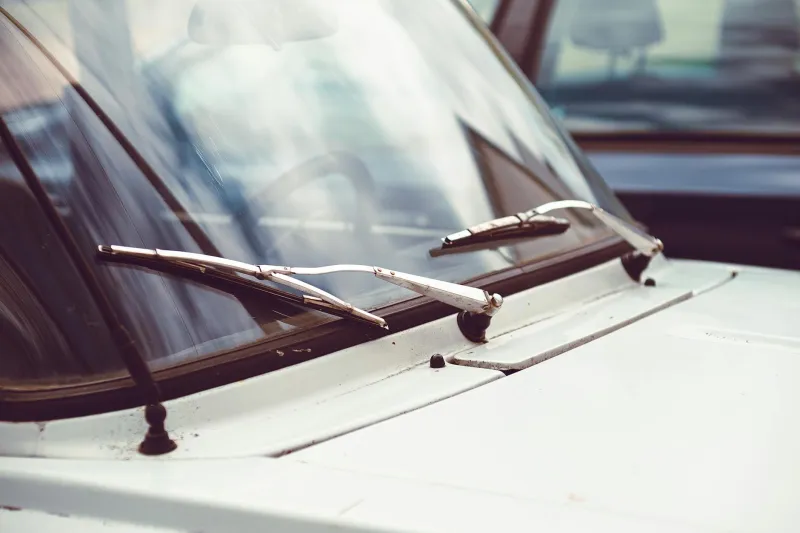
Anderson thought there had to be a better way. Back in Birmingham, she designed a spring-loaded arm with a rubber blade that could sweep across the windshield from inside the vehicle. The driver would simply pull a lever, and the blade would clear away rain, snow, or debris.
She received her patent in 1903, but car manufacturers weren't interested. They told her the device would distract drivers and that people preferred to drive with their windshields folded down anyway. Anderson's invention sat unused for over a decade.
The Luxury That Nobody Wanted
By 1916, cars were becoming more sophisticated, and closed vehicles with permanent windshields were gaining popularity. Suddenly, Anderson's "windshield cleaning device" made perfect sense. Cadillac became the first manufacturer to offer wipers as standard equipment in 1922, but most other automakers treated them as optional extras — like power steering or air conditioning today.
Even when available, early wipers were far from convenient. Most operated manually, requiring drivers to continuously work a hand crank or lever to keep the blade moving. Some used vacuum power from the engine, which meant they slowed down or stopped entirely when you accelerated — exactly when you needed them most during highway driving.
Electric wipers didn't become common until the 1940s, and even then, they were often single-speed affairs that moved at one relentless pace regardless of how hard it was raining.
From Luxury to Legal Requirement
The transformation was gradual but decisive. By the 1930s, most new cars included wipers as standard equipment, though their quality varied dramatically. The real turning point came in the 1960s when states began mandating windshield wipers as safety equipment. What had once been an optional convenience became legally required.
This shift reflected a broader change in how Americans thought about automotive safety. Features that were once considered luxuries — like seat belts, turn signals, and yes, windshield wipers — became recognized as essential for public safety.
The 1960s also brought intermittent wipers, invented by Robert Kearns after he was struck in the eye by a champagne cork and noticed how his damaged eye blinked at irregular intervals. His innovation allowed wipers to operate at variable speeds, matching the intensity of the weather.
The Car That Thinks for Itself
Today's windshield wipers represent the ultimate evolution of Anderson's simple idea. Rain-sensing wipers use optical sensors to detect moisture on the windshield and automatically adjust their speed — or turn themselves on entirely without any driver input.
These systems are so sophisticated they can distinguish between light mist and heavy downpour, adjusting not just frequency but also the pressure and speed of the wiper blades. Some luxury vehicles even have wipers that detect when you're driving through a car wash and automatically park themselves to avoid damage.
Modern wipers also integrate with other vehicle systems. They can trigger headlights in some states where daytime running lights are required during wiper use. They communicate with lane-keeping assistance systems, which temporarily disable themselves when wipers are active since lane markings become harder to detect in wet conditions.
The Invisible Revolution
The journey from Mary Anderson's hand-cranked invention to today's sensor-driven systems illustrates something profound about technological progress. We've moved from manually controlling every aspect of our vehicles to cars that anticipate our needs and act accordingly.
Most drivers today have no idea when their wipers activate automatically. The system works so seamlessly that we only notice it when it malfunctions — a stark contrast to the early days when operating wipers required constant attention and physical effort.
This evolution mirrors broader changes in automotive technology. Features that once demanded active driver involvement — from starting the engine to maintaining speed on highways — increasingly happen without conscious thought. We've traded manual control for automated convenience, often without realizing how dramatically our relationship with our vehicles has changed.
What We Lost and Gained
There's something both remarkable and slightly unsettling about this progression. Mary Anderson's original wiper put control in the driver's hands — literally. You decided when conditions warranted clearing your windshield, and you provided the energy to make it happen.
Today's automatic systems make thousands of micro-decisions we never think about, from when to start wiping to how fast the blades should move. We've gained tremendous convenience and safety, but we've also surrendered another small piece of direct control over our driving experience.
The next time rain starts falling and your wipers spring to life without any input from you, remember Mary Anderson watching that streetcar conductor struggle in the snow. The gap between her simple mechanical solution and today's intelligent systems represents more than just technological progress — it's a fundamental shift in how we interact with the machines that carry us through our daily lives.