Breaking Into Cars Once Meant Learning to Pick Locks — Now Your Car Hands Thieves the Keys Through Wi-Fi
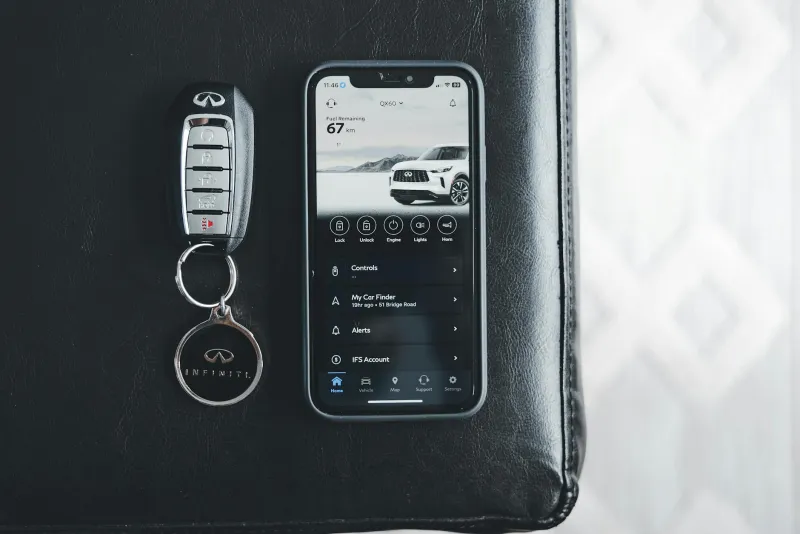
In 1985, stealing a car was a commitment. You needed tools, skills, time, and the willingness to make enough noise to wake the neighborhood. The average car thief carried a slim jim, a screwdriver, and maybe a coat hanger if they were feeling fancy. Breaking into a locked vehicle meant actually breaking something — usually the window, the door lock, or the steering column.
Today, car thieves work in silence from your driveway, and your vehicle's own security system does most of the heavy lifting.
When Car Theft Required a Criminal Education
Back in the day, automotive crime was blue-collar work. Professional car thieves spent years perfecting their craft, learning the mechanical vulnerabilities of different makes and models. They knew which steering columns broke easiest, which ignition switches could be bypassed with a screwdriver, and how to hotwire a Ford versus a Chevy.
The process was neither quick nor quiet. A typical car theft took anywhere from five to fifteen minutes of concentrated effort, usually involving visible damage and audible destruction. Thieves had to physically defeat multiple layers of security: the door lock, the ignition lock, and often a steering wheel lock or alarm system.
Popular anti-theft devices like The Club turned car theft into a workout routine. These bright yellow steering wheel locks didn't just deter thieves — they forced criminals to bring power tools to the job site. The sight of someone with a hacksaw working on a steering wheel in broad daylight tended to attract unwanted attention.
 Photo: The Club, via www.thejakartapost.com
Insurance companies loved this era of predictable crime. Stolen vehicles usually showed obvious signs of forced entry, making claims investigations straightforward. Cars were either stolen or they weren't — there wasn't much gray area.
The Digital Revolution That Criminals Didn't Ask For
Modern vehicles solved the car theft problem by eliminating it entirely — and then accidentally created a completely different problem that's ten times worse.
Keyless entry systems, introduced as a luxury convenience feature, fundamentally changed how cars communicate with their owners. Instead of requiring physical contact between a metal key and a mechanical lock, modern vehicles constantly broadcast radio signals, searching for their matching key fobs like electronic bloodhounds.
This always-on communication system works beautifully when you're walking up to your car with groceries in both hands. It works less beautifully when criminals exploit the same technology from outside your bedroom window.
The Two-Minute Heist
Relay attacks have turned car theft into a precise, nearly silent operation that would make the old-school criminals weep with envy. Here's how it works:
Two thieves position themselves strategically — one near your house where your key fob is sitting (probably on a kitchen counter or nightstand), and another next to your car in the driveway. Using devices that cost less than a decent dinner, they amplify and relay the signal from your key fob to your vehicle.
Your car, detecting what it believes is the legitimate key fob nearby, politely unlocks itself and allows the engine to start. The entire process takes less than two minutes and makes no more noise than someone getting into their own car.
The criminal doesn't need to know anything about your specific vehicle, understand automotive electronics, or even speak English. The car's own security system has been convinced to cooperate completely.
The Numbers Don't Lie
The statistics are staggering. According to the National Insurance Crime Bureau, vehicle thefts have skyrocketed in recent years, with keyless vehicles being targeted at dramatically higher rates than traditional keyed cars. Cities like Chicago and Los Angeles report that relay attacks now account for more than 80% of vehicle thefts involving newer model cars.
 Photo: Los Angeles, via i.etsystatic.com
What's particularly alarming is how the crime has scaled. Where old-fashioned car theft required individual skill and effort for each vehicle, relay attacks can be performed by anyone with basic equipment and a YouTube tutorial. The barriers to entry have essentially disappeared.
Insurance companies, meanwhile, are struggling to adapt their risk models to this new reality. When a car can be stolen without any visible signs of forced entry or mechanical tampering, proving theft becomes significantly more complicated. Some insurers now require additional documentation or impose higher deductibles for keyless vehicles.
The Convenience Trap
The irony is palpable: the technology designed to make our lives easier has made criminals' lives easier too. Keyless entry was supposed to eliminate the frustration of fumbling with keys in the dark or in bad weather. Push-button ignition was meant to streamline the driving experience.
Instead, we've created vehicles that are constantly vulnerable, broadcasting their availability to anyone with the right equipment. Your car key, sitting innocently on your kitchen counter, is essentially a radio beacon announcing the location of your $40,000 investment.
Automakers have responded with increasingly sophisticated countermeasures — motion sensors that put key fobs to sleep, rolling encryption codes, and signal shielding. But it's an arms race, and the criminals are adapting faster than the engineers.
What Old-School Thieves Think of Modern Crime
Interviews with reformed car thieves from the 1980s and 90s reveal a fascinating perspective on modern automotive crime. Many express amazement at how easy vehicle theft has become, but also a kind of professional disappointment.
"We had to actually know what we were doing," one former thief explained. "You couldn't just wake up one morning and decide to steal cars. It took practice, tools, and real skill. These kids today are just pointing devices at cars like TV remotes."
The craftsmanship element has been completely removed from automotive crime. Where stealing cars once required understanding mechanical systems, reading wiring diagrams, and developing manual dexterity, today's car thieves are essentially operating sophisticated remote controls.
Fighting Back Against Your Own Car
Defending against relay attacks requires fighting your vehicle's natural instincts. The most effective countermeasures involve blocking or disrupting the communication between your key fob and your car — essentially breaking the convenience features you paid for.
Faraday pouches, metal boxes that block radio signals, have become the new version of steering wheel locks. Parking your car in a garage helps, but many thieves can amplify signals through garage doors and exterior walls. Some security experts recommend storing key fobs in refrigerators or microwaves — appliances that happen to block radio frequencies effectively.
The ultimate irony is that the most secure approach is often to buy a car with traditional mechanical keys. Those "outdated" vehicles that require physical key insertion are essentially immune to relay attacks, making them safer from theft than their high-tech counterparts.
The Price of Progress
The transformation of car theft from a skilled trade to a point-and-click operation represents something larger than just criminal evolution. It's a perfect example of how technological solutions can create entirely new problems while solving old ones.
We eliminated the inconvenience of mechanical keys and the noise of traditional break-ins. In exchange, we've created a world where your car can be stolen silently while you sleep, using signals from the very device meant to protect it.
The gap between then and now isn't just about technology — it's about unintended consequences. Every convenience comes with a cost, and sometimes we don't discover what we've traded away until it's too late. Your grandfather's car might have been easier to break into, but at least he could hear it happening.