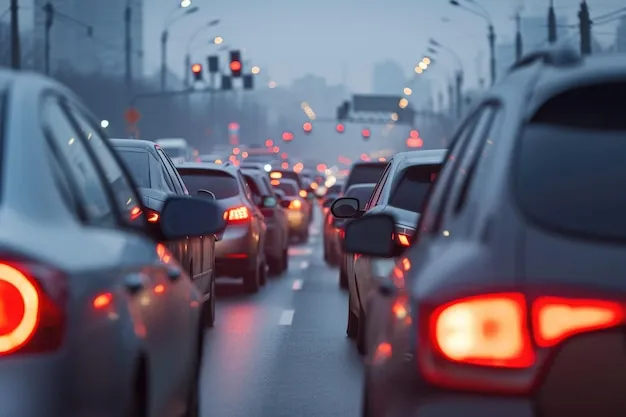
The Drive Home Used to Be Yours — Now It Belongs to Everyone Else
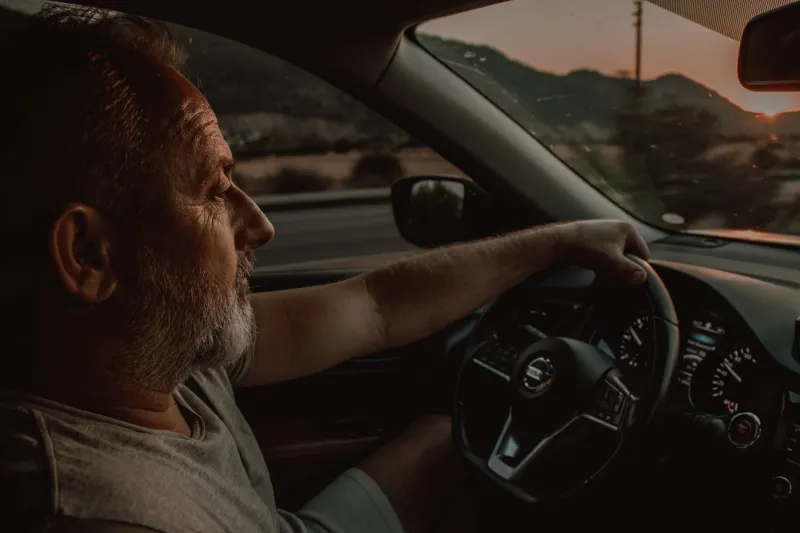
Ask someone who drove to work in 1987 what they did during the commute and they'll probably pause before answering. Not because they can't remember, but because the question feels slightly odd. They drove. They listened to the radio. They thought about things. Sometimes they didn't think about anything at all. The commute wasn't an experience you curated — it was just time, yours, moving at highway speed.
Ask someone the same question today and you'll get a list. They checked messages at the light. They switched between two navigation apps because one kept rerouting. Their car read out a work email. A podcast was playing but they can't remember which one. The Bluetooth disconnected twice. They got a notification from their insurance app flagging a hard brake.
Same activity. Completely different reality.
The Last Private Space
For most of the twentieth century, the car commute occupied a strange and underappreciated place in American daily life. It was, functionally, a decompression chamber. A space between roles — between worker and parent, between the office and the kitchen table — where you didn't have to be anything in particular.
The radio helped. But AM radio in the 1970s, or even FM radio in the 1990s, was a passive companion, not an interactive demand. It talked at you, and you could ignore it whenever you wanted. There were no alerts, no interruptions, no content personalized to your behavior. You might catch a traffic report at the top of the hour. You might not. Either way, the basic texture of the drive was yours to shape.
Psychologists who've studied commuting have noted — somewhat counterintuitively — that longer solo commutes weren't always experienced as purely negative. The time had value. People used it to mentally rehearse difficult conversations, process the events of the workday, or simply let their minds wander in ways that the structured hours of work and home life didn't allow. The car was, for many Americans, the place where they did their best thinking without knowing they were thinking at all.
When the Dashboard Became a Second Screen
The colonization of the commute didn't happen overnight. It crept in gradually, each new feature arriving with a promise of convenience that made it hard to say no.
First came the CD player, which demanded manual attention in ways the radio didn't — ejecting, swapping, skipping. Then the early GPS units, mounted to the windshield, talking in robotic voices. Then Bluetooth phone integration, which meant calls you'd previously ignored at home now followed you into the car. Then the smartphone, docked in a cradle, glowing and buzzing at every red light. Then the connected infotainment screen, embedded in the dash itself, larger each model year, integrating apps, streaming services, and calendar alerts into the physical architecture of the vehicle.
By the mid-2010s, the modern American commute had become something close to a digital gauntlet. Navigation apps like Waze and Google Maps introduced real-time traffic rerouting that required ongoing attention — the route could change mid-drive, and ignoring the update might cost you twenty minutes. Podcast culture turned commute time into a productivity metric, something to be optimized with educational content or professional development. Spotify served up algorithmically curated playlists that somehow felt more demanding than the radio ever did, because you'd trained it to know you and felt vaguely responsible for its accuracy.
And then the cars themselves started talking back. Modern vehicles come loaded with driver-assistance alerts, lane-departure warnings, proximity sensors, and — increasingly — telematics systems that monitor driving behavior for insurance purposes. Your commute isn't just being interrupted. It's being watched, scored, and reported.
The Notification That Follows You Everywhere
There's a specific psychological cost to this that doesn't get discussed enough. Attention researchers call it attentional residue — the way your brain continues processing a notification or interruption even after you've nominally moved on from it. Every buzz, ping, or alert that breaks into your drive leaves a small cognitive trace. Multiply that across a forty-five minute commute and you arrive home not refreshed, but fractured.
The irony is that most of the technology in your car exists, at least in its marketing, to make driving safer and less stressful. Navigation reduces wrong turns. Hands-free calling keeps your eyes on the road. Traffic alerts help you avoid delays. But the aggregate effect of all these systems running simultaneously is something closer to the opposite of calm. The commute that once offered mental breathing room now arrives pre-packaged with its own set of demands.
Some people have noticed. There's a quiet but growing counter-movement of commuters who deliberately leave the podcast off, mute the phone, and let the drive just be a drive. It feels, they report, almost radical — like an act of low-level rebellion against the assumption that every minute must be filled with input.
What We Actually Lost
The unstructured commute produced things that are hard to quantify. Decisions made. Ideas formed. Emotional processing that happened without a therapist or an app or a meditation timer. The car was a container for a particular kind of thinking that doesn't happen when your brain is managing incoming data streams.
We didn't choose to give that up, exactly. We just said yes to each individual feature as it arrived, and didn't notice until the quiet was completely gone.
The gap between the 1985 commute and the 2025 commute isn't measured in miles or minutes. It's measured in the mental space that used to exist between here and home — and doesn't anymore.