The Polite Beep That Became a War Cry — How the Car Horn Lost Its Manners
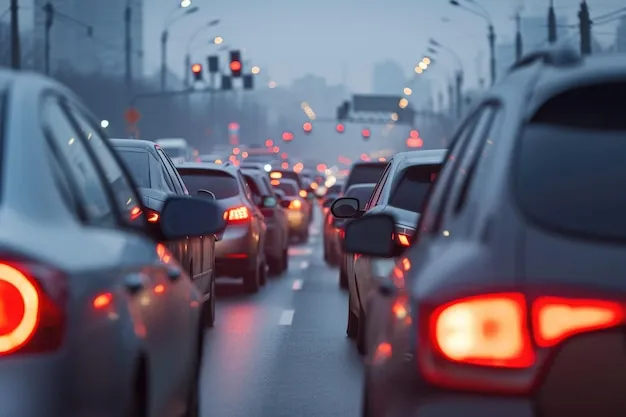
Photo: frustrated driver honking car horn highway traffic jam, via img.freepik.com
In the summer of 1915, a driver approaching a blind curve on a country road outside of Columbus, Ohio would have done something that would look almost quaint today. He would have squeezed the rubber bulb on his horn — a short, polite honk — to announce his presence to any oncoming traffic before he cleared the bend. Not out of frustration. Not to express an opinion about the other driver's intelligence. As a courtesy. As communication.
 Photo: Columbus, Ohio, via downtowncolumbus.com
That horn had a purpose, a meaning, and a social context that every other driver understood.
Now try to remember the last time you heard a car horn and thought: that was considerate.
When the Horn Was a Language
The earliest automobiles arrived in American life without any established etiquette — and drivers, being human, invented one. Road networks were sparse, speeds were low, and the population of drivers was small enough that the roads had a kind of community feel. People recognized each other's cars. They waved. They stopped to help with breakdowns. They communicated.
The horn was a central part of that communication system. Specific patterns carried specific meanings that varied by region but shared a common logic. One short tap: I'm here, be aware. Two taps: thanks for letting me pass. A longer blast at a rural intersection: I'm coming through, don't pull out. Drivers approaching the crest of a hill would honk as a matter of standard practice, not aggression. It was the automotive equivalent of saying excuse me before stepping around someone.
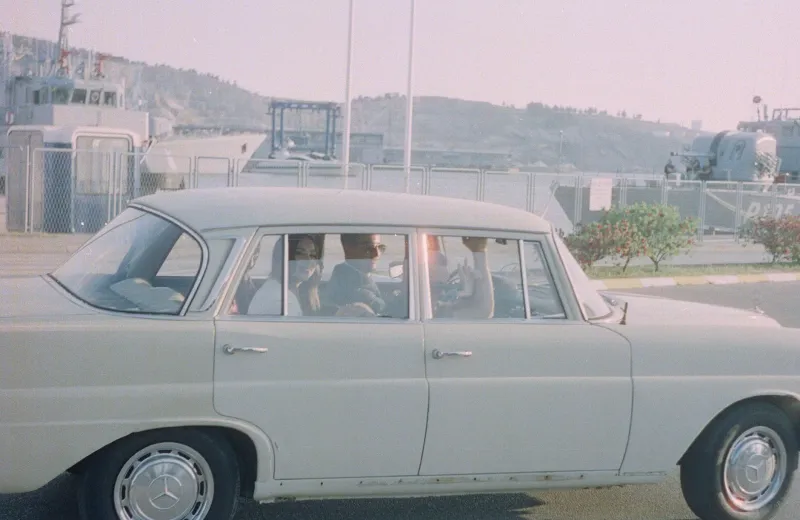
Driving manuals from the 1920s and 30s explicitly codified horn etiquette. The American Automobile Association published guidance on appropriate horn use that emphasized its role as a safety device and a courtesy tool — not an emotional outlet. The idea that a horn might be used to express impatience or hostility toward another driver would have struck early motoring writers as bizarre. The car was a guest on a shared road. The horn was how it introduced itself.
The Infrastructure of Courtesy
Early driving culture supported this etiquette in ways modern roads simply don't. Traffic was lighter, speeds lower, and drivers were more likely to encounter the same people repeatedly on the same routes. A farmer who used the road to town every Tuesday morning knew the other regulars. Honking at a neighbor — even to warn them of your approach — was an act with social weight. You'd see that person at the hardware store on Saturday.
Small-town America in the 1930s and 40s had a driving culture that mirrored its social culture: everybody was somebody's neighbor, and behavior on the road reflected back on you off it. Laying on the horn at a slow driver wasn't just rude — it was the kind of thing people talked about.
The horn also carried genuine etiquette around passing. Before turn signals were standard equipment, a driver intending to overtake would give a warning honk as they pulled out, acknowledging the other driver and signaling their intention. It was a cooperative act, not a competitive one. The roads were shared infrastructure, and drivers behaved accordingly.
What Changed, and When
The postwar boom changed everything about American driving culture simultaneously. Highway construction exploded. Car ownership surged. The suburbs spread. Commuting became a fact of life for millions of Americans who had never previously spent significant time in a car every day. And crucially, the roads filled with strangers.
Anonymity is one of the most powerful forces in human behavior. The research on this is unambiguous: people behave differently when they believe they won't be recognized or held accountable. The enclosed metal shell of a car provides exactly that kind of anonymity — what psychologists call deindividuation. You're not a neighbor or a community member behind the wheel. You're a driver, and so is everyone else, and none of you know each other.
By the 1960s, urban traffic was dense enough and impersonal enough that horn etiquette had already begun to erode in major cities. New York, Los Angeles, Chicago — these were places where the old rural courtesy codes were irrelevant. You'd never see these people again. The horn became a pressure valve rather than a communication device.
 Photo: Los Angeles, via i.pinimg.com
 Photo: New York, via gothamgal.com
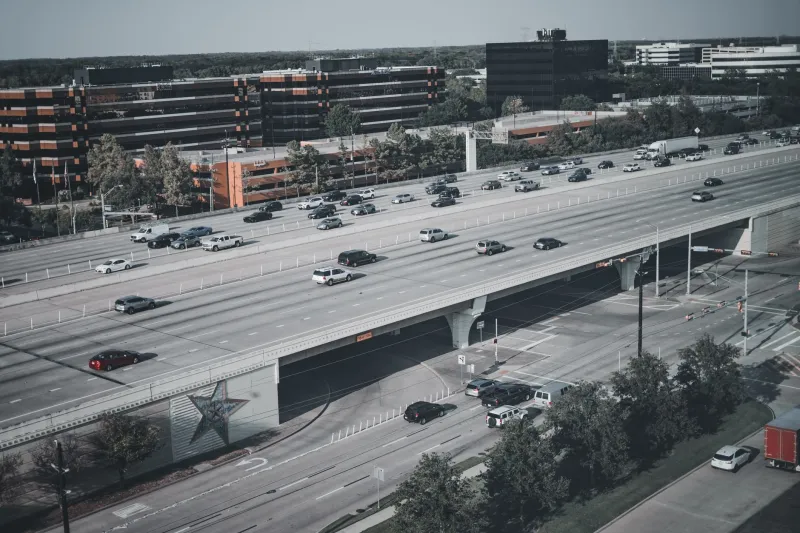
The interstate highway system, which reached near-completion by the 1970s, accelerated the shift. High-speed, high-volume, high-anonymity driving became the American norm. The social contract that had governed the horn in the age of country roads and familiar faces simply had no mechanism to survive the transition.
The Road Rage Numbers Are Hard to Ignore
By the 1990s, road rage had become a recognized phenomenon serious enough to attract federal attention. The AAA Foundation for Traffic Safety — the same organization that once published horn etiquette guides — began tracking aggressive driving incidents and found numbers that were difficult to contextualize as anything other than a social breakdown.
Modern data is stark. The AAA Foundation's research has found that nearly 80 percent of American drivers report expressing significant anger, aggression, or road rage behind the wheel at least once in the previous year. A 2021 Everytown research analysis found that road rage incidents involving firearms had more than doubled over the preceding five years, with over 500 people shot in road rage incidents in 2021 alone.
The horn sits at the center of this deterioration. Studies on urban driving behavior consistently find that horn use in American cities is dominated by frustration and aggression rather than safety communication. Drivers honk at green lights the moment they turn. They honk at pedestrians legally crossing in crosswalks. They honk at drivers who hesitate before merging. The horn has become the audio equivalent of a middle finger — a broadcast of irritation rather than a signal of intent.
Some cities have tried to push back. New York City technically prohibits unnecessary horn use and has periodically run enforcement campaigns. They've had limited success. The culture has moved too far.
What We Actually Lost
It would be easy to read this as simple nostalgia — a longing for a slower, simpler time that ignores the genuine frustrations of modern driving. Traffic is worse. Commutes are longer. Infrastructure is strained. Drivers are tired and stressed and running late. The conditions that produce road rage aren't imaginary.
But what the evolution of horn culture really reveals is something larger: the collapse of the idea that other drivers are people deserving of courtesy rather than obstacles deserving of contempt. The early motorists who tapped their horns at blind curves weren't just following a rule. They were operating with an assumption that the other driver mattered — that their safety was worth a small gesture of consideration.
Somewhere in the transition from country roads to eight-lane freeways, from neighbors to strangers, from community to commute, that assumption quietly disappeared. The horn didn't change. The roads got bigger, the traffic got heavier, and the drivers stopped seeing each other.
The gap between a courtesy tap on a 1920s rural road and a sustained horn blast on a 2024 freeway onramp isn't just about manners. It's about what kind of society we became once we all got behind the wheel and stopped recognizing each other.