The Odometer Used to Be a Death Sentence — Now It's Just Getting Started
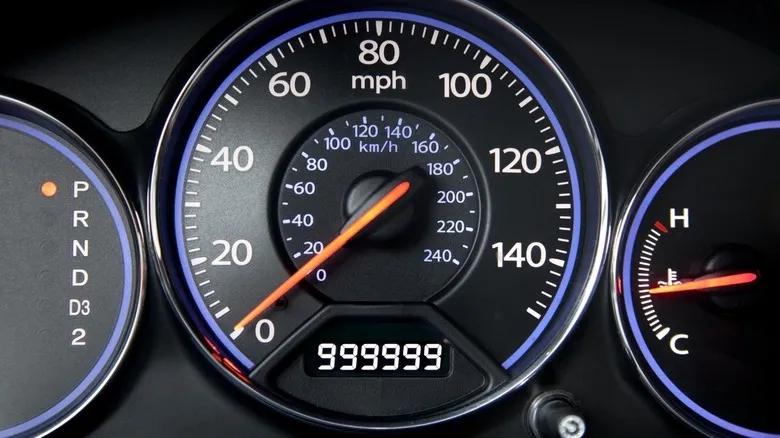
Photo: car odometer 200000 miles highway road trip long distance driving, via www.slashgear.com
The Odometer Used to Be a Death Sentence — Now It's Just Getting Started
Somewhere in a garage in suburban Ohio, there's a 2008 Toyota Camry with 247,000 miles on it. The owner — a retired teacher named Carol, or someone very much like her — changes the oil every 5,000 miles, replaces the tires when the tread wears down, and has no intention of buying anything new. The car starts every morning. The air conditioning works. The check engine light has been dark for three years.
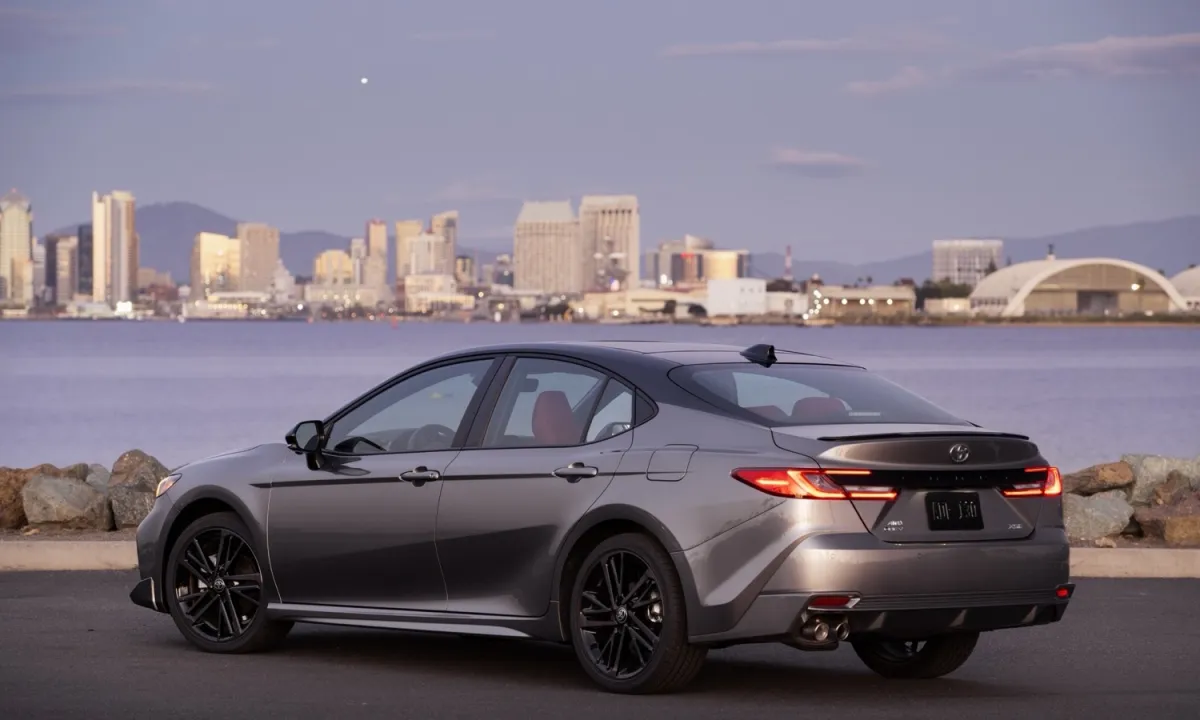 Photo: Toyota Camry, via www.actualidadmotor.com
In 1972, that car would have been unthinkable. Not because Carol isn't careful, but because the engineering required to make a vehicle survive a quarter million miles simply didn't exist yet. A 1972 car that reached 100,000 miles was, by the standards of its era, something to be talked about. A car that reached 200,000 was practically a folk legend.
The gap between those two realities is one of the quietest revolutions in American automotive history — and its effects ripple through everything from how long people keep their cars to why the used car market looks nothing like it did fifty years ago.
When Six Figures on the Odometer Meant Goodbye
Through most of the 1950s, 1960s, and 1970s, 100,000 miles was widely understood as the outer boundary of a car's useful life. Engines of that era operated with manufacturing tolerances — the precision gaps between moving parts — that were simply far wider than what's achievable today. Oil quality was limited. Coolant systems were less sophisticated. Rubber components degraded faster. The cumulative wear of a hundred thousand miles left most engines burning oil, running rough, and requiring the kind of investment that rarely made financial sense.
The conventional wisdom of the era reflected this reality. Automotive journalists, mechanics, and consumer advisors all treated six figures on the odometer as a natural inflection point. A car approaching 100,000 miles was a car approaching the end. Trade it in. Start fresh. The depreciation math of the time supported this logic: a high-mileage used car had so little resale value that holding on to it felt like throwing good money after bad.
Odometers of the era literally reinforced this thinking. Through the 1980s and into the early 1990s, most American vehicles came equipped with five-digit odometers — instruments that measured up to 99,999 miles and then rolled back to zero. The odometer itself was engineered around the assumption that reaching six figures was an endpoint rather than a midpoint.
The Engineering Shift That Changed Everything
The transformation didn't happen overnight, and it didn't come from a single breakthrough. It was the accumulation of several decades of incremental improvement across almost every system in the vehicle.
Manufacturing tolerances tightened dramatically through the 1980s and 1990s, driven partly by Japanese competition that exposed American automakers to the quality standards their domestic customers hadn't known to demand. Engines built to tighter specifications wore more slowly, maintained compression longer, and required less frequent major intervention.
Synthetic motor oil, which became widely accessible to consumers through the 1980s and 1990s, changed the lubrication equation fundamentally. Synthetic formulations maintain their viscosity more consistently across temperature extremes, resist breakdown from heat and oxidation more effectively than conventional oil, and provide meaningfully better protection during the cold-start conditions that cause the majority of engine wear. An engine running synthetic oil simply ages more slowly.
Cooling systems improved. Fuel injection replaced carburetors, providing more precise fuel delivery that reduced the combustion irregularities that contributed to long-term engine wear. Electronic engine management systems learned to compensate for minor inefficiencies in real time. Materials science advanced, producing better alloys for engine components, more durable seals, and rubber formulations that resisted degradation over longer periods.
The result of all these changes, compounding over decades, was that 100,000 miles stopped being a finish line and became something closer to the halfway point.
How Americans Changed Their Behavior in Response
When the engineering shifted, the culture eventually followed — though with a lag that's worth noting.
For years, the 100,000-mile stigma persisted in the used car market even after the engineering reality had changed. Buyers who had grown up watching their parents trade in aging vehicles retained the instinct that high mileage meant high risk. Used car prices still dropped sharply around the 100,000-mile mark well into the 2000s, creating genuine value opportunities for buyers who understood that a well-maintained modern vehicle at 100,000 miles often had its best years ahead of it.
Gradually, that understanding became more widespread. The average age of vehicles on American roads has climbed steadily for decades. In 1977, the average age of a registered passenger vehicle in the United States was roughly 6.5 years. By 2023, that figure had risen to approximately 12.5 years — a near doubling that reflects both economic pressures and the genuine increase in vehicle longevity.
 Photo: United States, via www.mappr.co
People are keeping their cars longer because their cars are worth keeping longer. That's a different calculation than the one their grandparents made.
The Downstream Effects Nobody Talks About
The longevity revolution has had consequences that extend well beyond individual ownership decisions.
The used car market has been structurally transformed. A 2015 vehicle with 90,000 miles is no longer a gamble — it's often a sensible purchase with years of reliable service ahead of it. This has pushed used car prices up, particularly for well-maintained examples of reliable models. The cars that would have been written off in the 1970s are now legitimate consumer choices.
The new car market has felt pressure from the other direction. When your existing vehicle can realistically serve you for another five years with normal maintenance, the urgency to buy new diminishes. Automakers have responded by leaning harder into technology upgrades, infotainment systems, and advanced safety features as reasons to trade in — because longevity alone no longer creates the replacement cycle it once did.
And the repair economy has shifted. A car worth keeping for 200,000 miles is a car worth investing in. Replacing a transmission in a 120,000-mile vehicle makes financial sense in a way it simply didn't when 120,000 miles meant a car was nearly worthless.
The New Benchmark Nobody Expected
Among enthusiasts and high-mileage communities online, 200,000 miles has become the new 100,000 — the milestone worth marking, the threshold that separates the merely well-maintained from the genuinely impressive. There are active communities dedicated to vehicles crossing 300,000 miles. Some Toyota and Honda models routinely exceed 400,000 with documented service histories.
Carol's Camry with 247,000 miles isn't a curiosity anymore. It's a data point in a broader story about what happens when engineering gets serious about longevity.
The odometer that once announced the end of a car's useful life now announces something closer to the beginning of its second act. That's a shift so fundamental it's changed the entire economics of car ownership — quietly, gradually, and almost without anyone declaring it a revolution.
But it was one.