The Bathroom Key on a Hubcap Was a Social Contract — What Happened to It?
There's a specific kind of frustration that belongs entirely to the modern age. You pull into a gas station somewhere off the interstate, you've been driving for two hours, and you need the restroom. You walk inside, ask the attendant, and they hand you a laminated card with a six-digit code, a QR code you need to scan with an app you don't have, and a quiet suggestion that the code only works if you made a fuel purchase in the last fifteen minutes.
Welcome to the gas station bathroom experience, 2025 edition.
It wasn't always this complicated.
The Hubcap Era
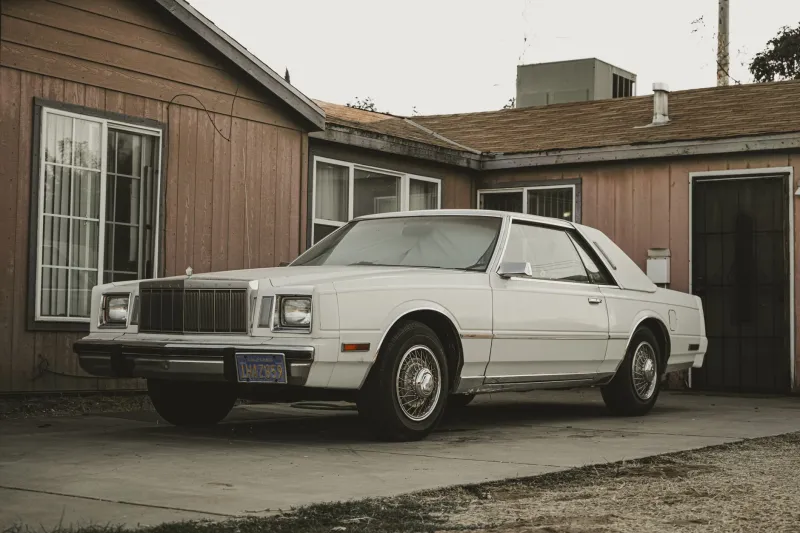
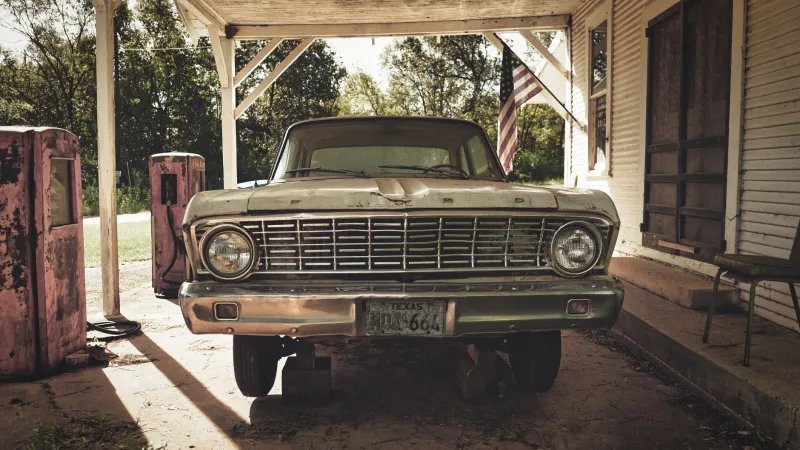
For most of the twentieth century, the gas station restroom operated on something close to pure goodwill. You pulled in, you asked, and someone handed you a key — often attached to something comically oversized so it wouldn't get lost. A hubcap. A wooden plank. A piece of PVC pipe the size of a Louisville Slugger. The key itself was almost beside the point. The message it carried was the real thing: you're welcome here.
This wasn't naivety. Station owners understood that travelers needed pit stops, and pit stops meant foot traffic, and foot traffic meant a chance to sell a Coke, a bag of chips, or a fill-up. The restroom was a loss leader in the most human sense of the term. It built goodwill. It built loyalty. In a country where road trips were a cultural institution and the open highway was genuinely romantic, the gas station was a node in a network of informal hospitality.
The men who ran those stations — and it was almost always men, usually the owners themselves — knew your face by the time you walked back out. Sometimes they'd check your oil without being asked. The restroom key wasn't just access to a toilet. It was the opening move in a small, unremarkable human exchange.
When Trust Got Expensive
Something started shifting in the 1990s, and it accelerated fast. Rising concerns about safety, liability, and the cost of maintaining facilities that weren't generating direct revenue started changing the calculus. Corporate chains replaced independent operators. Standardized policies replaced individual judgment. And the restroom — once a courtesy — became a liability to be managed.
The codes came first. Simple four-digit combinations printed on receipts, changed weekly, occasionally posted on a small sign near the register. Annoying, but manageable. Then the codes started varying by location within the same chain. Then some stations moved to receipt-only access, requiring a fuel purchase just to get a slip of paper with the number on it. Then the apps arrived.
Today, depending on which chain you stop at, you might need to download a loyalty app, create an account, enable location services, link a payment method, and earn enough points to unlock what used to be a basic human courtesy. Some stations have eliminated public restrooms entirely, citing maintenance costs and safety concerns. Others have installed keypad locks that reset every hour, with codes only available at the register — which means standing in line behind three people buying lottery tickets just to use the bathroom.
A Map of Broken Systems
What makes this particularly strange is how fragmented it's become. There's no standard. A Pilot Flying J truck stop in Tennessee operates completely differently from a Sheetz in Pennsylvania, which operates nothing like a Wawa in New Jersey, which has nothing in common with a local independent station in rural Montana. Every chain has its own logic, its own app, its own set of hoops.
For long-distance drivers, this creates a genuinely exhausting landscape. You can't assume anything. The restroom that was accessible last year might be locked behind a membership program this year. The code that worked at one location in a chain won't work at another. And if your phone is dead — which is exactly when you most need a gas station stop — you're essentially negotiating with a stranger for access to a toilet.
The irony is thick. We live in an era of unprecedented convenience in almost every other dimension of consumer life. You can order almost anything to your door in two hours. You can unlock your car with your phone. You can pay for gas without touching a keypad. But the restroom — the most basic infrastructure of human travel — has become more complicated, not less.
What the Locked Door Is Really Saying
There's a broader story here about how American public spaces have changed. The gas station bathroom is a small example of a larger trend: the steady erosion of informal, no-strings-attached public amenities. Parks, libraries, and public transit aside, most of the spaces where Americans used to congregate without transacting have slowly been converted into conditional environments. You can be here, but only if you buy something, scan something, or prove something.
The oversized hubcap key said: we trust that you're a decent person passing through. The six-digit rotating code says something different. It says: prove it first.
That's not necessarily wrong. Vandalism is real. Maintenance costs are real. Safety concerns are real. But there's something worth noticing in how quickly we normalized a system that treats every traveler as a potential problem before they've done anything at all.
The Gap
The distance between a wooden plank with a key on it and a loyalty app with a restroom unlock feature isn't just technological. It's cultural. It reflects a shift in how businesses think about strangers, how liability has reshaped hospitality, and how the informal trust that once lubricated everyday American life has been quietly replaced by systems designed to minimize exposure.
Somebody, somewhere, decided that the cost of being open was too high. And now the rest of us stand at a keypad, squinting at a receipt, wondering what the code means.