Madison Avenue Used to Sell Dreams — Now It Sells Monthly Billing Cycles
When Cars Were Sold Like Poetry
Flip through a 1965 issue of Life magazine and you'll find something remarkable: car advertisements that read like love letters to the American spirit. Pontiac promised "Wide-Track Excitement." Ford invited you to "Test Drive the Total Performance Car." Chevrolet simply declared "See the USA in Your Chevrolet," and somehow that felt like both a suggestion and a birthright.
These weren't just ads — they were manifestos. Full-page spreads showed families loading station wagons for cross-country adventures, young couples racing convertibles down coastal highways, and businessmen commanding the respect that came with driving Detroit's finest. The cars themselves were supporting characters in stories about freedom, success, and the endless possibility that lay just beyond the horizon.
The language was unabashedly romantic. Cars had "spirit" and "soul." They were "bred for performance" and "designed for living." A Mustang wasn't just transportation; it was "the car designed to be designed by you." These campaigns sold an entire lifestyle, a version of American identity that came with bucket seats and a V8 engine.
The Golden Age of Automotive Fantasy
Madison Avenue understood something fundamental about the American psyche in the postwar era: we wanted our cars to be more than machines. We wanted them to be expressions of who we were and, more importantly, who we could become.
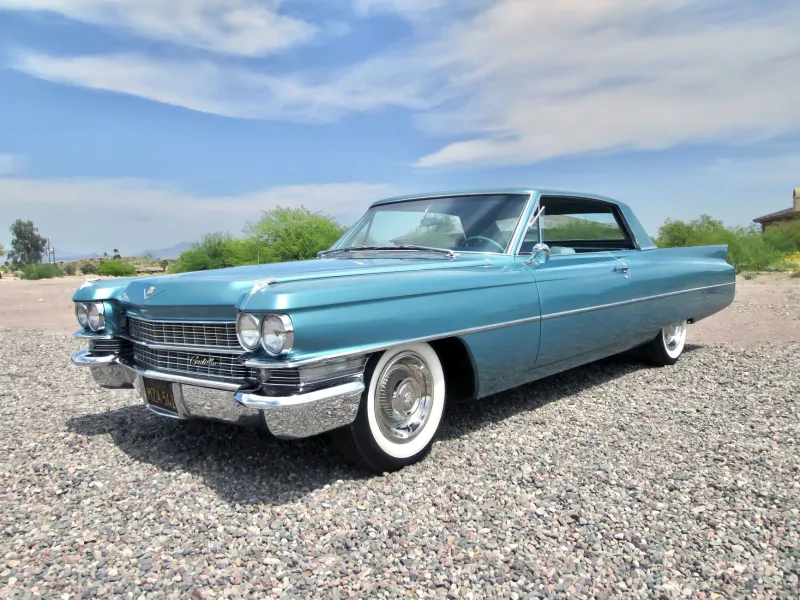
Cadillac ads featured couples in evening wear stepping out at the opera. Oldsmobile promised "Rocket Action" that would transform your daily commute into a space-age adventure. Even practical family sedans were marketed as gateways to weekend escapes and summer vacations that would create memories lasting a lifetime.
The photography was cinematic — sweeping landscapes, dramatic lighting, and cars positioned like sculptures against backdrops that suggested infinite possibility. These images sold more than transportation; they sold transformation. Buy this car, and you weren't just getting from point A to point B. You were joining a community of adventurers, achievers, and dreamers.
The taglines became part of American vocabulary. "Have you driven a Ford lately?" wasn't just a question — it was a challenge to experience something new. "Like a Rock" didn't just describe Chevrolet's trucks; it became shorthand for reliability and strength that extended far beyond the automotive world.
The Algorithm Takes Over
Today's car marketing operates in a fundamentally different universe. Instead of full-page magazine spreads, we get targeted Instagram ads based on our browsing history. Instead of promising adventure, they're pitching connectivity. Instead of selling dreams, they're selling subscriptions.
Modern car commercials spend more time explaining wireless charging pads than horsepower. They highlight smartphone integration over acceleration. The romance of the open road has been replaced by the convenience of never having to look up from your screen.
The language has shifted from emotional to transactional. Cars don't have "spirit" anymore — they have "user experiences." They're not "bred for performance" — they're "optimized for efficiency." The Mustang that once represented unbridled freedom now comes with a "Co-Pilot360" suite of driver assistance features that actively prevent you from experiencing that freedom.
From Ownership to Access
Perhaps most tellingly, modern automotive marketing has largely abandoned the concept of ownership altogether. Today's ads are more likely to mention lease terms than purchase prices. They highlight "as low as" monthly payments rather than the total cost of the vehicle.
The shift reflects a broader change in how automakers view their customers. Where they once sold you a car and hoped you'd come back in five or ten years for another one, they now see you as a recurring revenue stream. The real money isn't in the sale — it's in the ongoing relationship.
This is why BMW can advertise heated seats as a subscription service with a straight face. Why Tesla can charge extra for software that unlocks performance your car already possesses. Why Ford can market "over-the-air updates" as a feature rather than what they actually are: a way to change the terms of your ownership after you've already bought the car.
The Subscription Mindset
The advertising reflects this new reality. Instead of promising that this car will be yours, modern marketing emphasizes that this car will be connected — to the manufacturer, to the internet, to a network of services that require ongoing payments to maintain.
The romantic imagery has been replaced by lifestyle shots that look more like software advertisements. Young professionals checking their phones in minimalist coffee shops. Families gathered around tablets in sterile living rooms. The car itself often feels like an afterthought, a necessary accessory to the digital lifestyle being sold.
Even the language of performance has been digitized. Cars don't have "horsepower" in modern ads — they have "advanced powertrains." They don't promise speed — they promise "seamless acceleration." The visceral thrill of driving has been processed through focus groups and transformed into sanitized marketing speak that could describe a vacuum cleaner just as easily as a sports car.
What We Lost Along the Way
The shift from selling dreams to selling subscriptions represents more than just a change in marketing strategy. It reflects a fundamental change in how we relate to the things we buy and the companies that make them.
When Chevrolet told us to "See the USA," they were encouraging us to go out and make our own adventures. When Ford promised "Total Performance," they were inviting us to discover what we and our cars could do together. These weren't just product pitches — they were invitations to live more fully.
Today's marketing is more honest about the transactional nature of the relationship, but it's also more limiting. Instead of encouraging exploration, it promises convenience. Instead of celebrating independence, it offers connectivity. Instead of selling us cars that could take us anywhere, it's selling us services that follow us everywhere.
The gap between then and now isn't just about advertising techniques — it's about what we expect from the things we buy and the companies that make them. We've traded the romance of ownership for the convenience of access, and somewhere in that exchange, we've lost the poetry that once made buying a car feel like the beginning of an adventure rather than the start of another monthly billing cycle.