The Station Wagon Was a Rolling Pinball Machine — And We Called It Family Travel
Picture a summer Sunday in 1967. Dad's behind the wheel of a Ford Country Squire, Mom's in the passenger seat with a road atlas folded wrong, and the kids — all four of them — are loose in the back. One's asleep across the rear window ledge, cheek pressed against warm glass. Two more are wrestling over a bag of chips in the cargo bay. The youngest is sitting on a pile of luggage like a tiny emperor surveying his kingdom. Nobody's buckled. Nobody's worried. This is just what a family road trip looked like.
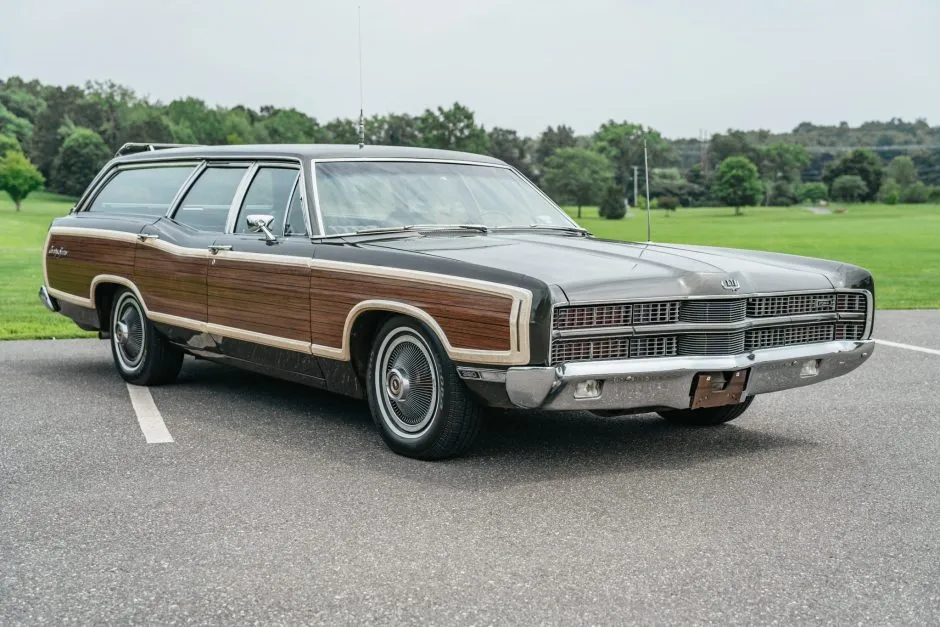 Photo: Ford Country Squire, via bringatrailer.com
And the terrifying part? It was completely normal.
A Generation of Human Projectiles
For most of the 1950s, 60s, and into the 70s, child passenger safety wasn't a concept that existed in any meaningful way. Lap belts had started appearing in cars by the early 1960s, but surveys at the time showed that fewer than one in ten Americans used them consistently — and that was for adults. Children were an afterthought.
The dominant parenting logic was intuitive but catastrophically wrong: hold the baby tight during a sudden stop, and everything will be fine. Generations of mothers rode shotgun with an infant on their lap, one arm braced across the child at every intersection like a human seatbelt. It felt protective. In an actual crash, the physics were brutal. At 30 miles per hour, a 10-pound infant effectively becomes a 300-pound projectile. A mother's arm was never going to stop that.
Station wagons made things worse by making things feel better. All that open space in the cargo area seemed like a luxury — room to spread out, to lie down, to play cards on a flat surface. Parents didn't see a danger zone. They saw a comfortable solution to a long drive with restless kids.
What the Numbers Were Actually Saying
By the late 1960s, motor vehicle crashes were the leading cause of death for American children. Not disease. Not accidents at home. Cars. Tens of thousands of children were dying or suffering severe injuries every year, and the connection between unsecured passengers and fatalities was becoming impossible to ignore — at least for researchers.
The public, though, wasn't connecting the dots. Crashes were seen as tragic but random. The idea that how children rode in cars — rather than just whether a crash happened — was the decisive factor wasn't part of mainstream thinking yet.
Early child safety seats did exist, but they weren't designed the way you'd hope. A 1969 study found that most of the child seats on the market at the time would actually make injuries worse in a serious collision. They were built to keep kids contained and elevated so they could see out the window — not to absorb crash forces. Some were little more than fabric pouches that hooked over the front seatback. Decorative, essentially.
The Long Road to Regulation
Change came slowly, pushed by researchers and pediatricians rather than the auto industry. Tennessee became the first state to pass a mandatory child passenger safety law in 1978 — requiring children under four to be restrained while riding in a vehicle. It was a modest start. By 1985, all 50 states had followed with their own versions.
But legislation and compliance are different things. Through the 1980s, child seat usage rates were still alarmingly low, and the seats that were being used were frequently installed incorrectly. Studies in the 1990s found that up to 80 percent of child safety seats were being used wrong — wrong direction, wrong recline angle, wrong harness position, straps too loose.
The federal government eventually stepped in with stricter manufacturing standards, and the LATCH system — a standardized set of anchors built into vehicles — was mandated for all new cars and child seats starting in 2002. The idea was to eliminate installation errors by making the connection between seat and car foolproof. It helped. It didn't fully solve the problem.
What Buckling Up Looks Like Today
Modern child passenger safety is its own specialized field. Pediatricians, certified child passenger safety technicians, and state health departments all have opinions — and regulations — about how children should ride. The current guidance from the American Academy of Pediatrics recommends rear-facing seats for as long as possible, typically until a child maxes out the seat's height or weight limit, which for many convertible seats is 40 to 50 pounds. That often means a child is rear-facing past their third birthday.
 Photo: American Academy of Pediatrics, via www.smartstart.org
From there, it's forward-facing with a harness, then a belt-positioning booster, then — eventually — a regular seatbelt. Each transition has specific criteria. Many states have laws governing the progression. Some require booster seats until age eight or 80 pounds. Others have different thresholds. Getting it right requires actual research.
Free car seat inspection events are held across the country, staffed by certified technicians who check installation and fit. Hospital discharge protocols for newborns include a car seat check before the family leaves the building. There are YouTube channels dedicated exclusively to car seat installation. It is, by any measure, a serious undertaking.
The Gap Is Staggering
The contrast between a child napping on the rear window ledge of a 1965 station wagon and the 47-step installation process for a modern infant seat represents one of the most dramatic safety reversals in American life. Motor vehicle fatality rates for children have fallen by roughly 90 percent since the 1970s, after accounting for miles traveled. That number represents hundreds of thousands of lives.
The kids who survived those station wagon summers weren't lucky because the roads were safer or the drivers were better. They were lucky because the crashes didn't happen to them. The ones where crashes did happen — those stories rarely made it into the family photo album.
We look back at those old road trip photos with nostalgia: the wood-paneled wagons, the open cargo bays, the kids sprawled out like they owned the place. It looks carefree. It was. That's exactly what made it so dangerous.