Blue-Collar Speed Demons — When Factory Workers Could Afford 400 Horsepower
When Speed Was Democratic
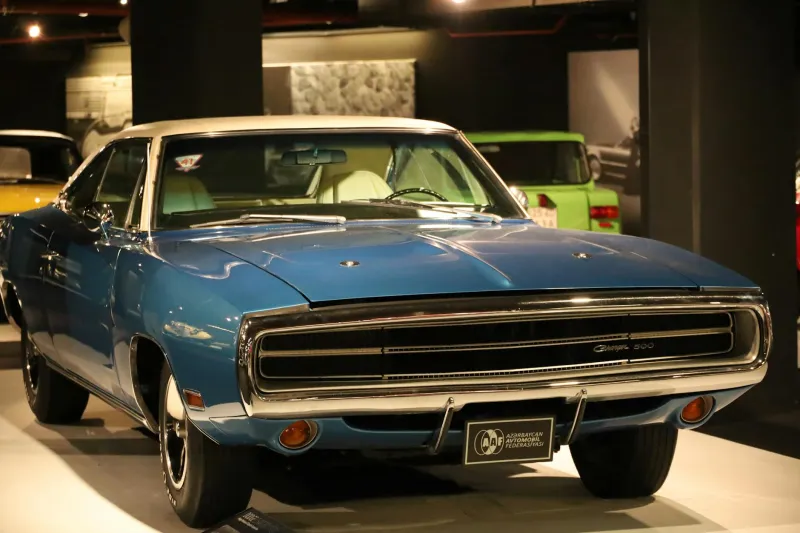
Walk into any Dodge dealer in 1969, and you could drive away with 440 cubic inches of pure American fury for $3,020. That Charger R/T wasn't some exotic supercar — it was transportation for guys who worked with their hands and wanted to go fast on weekends. The average factory worker earned about $7,700 that year, making the Charger less than half their annual salary.
 Photo: Dodge Charger R/T, via play-lh.googleusercontent.com
These weren't stripped-down race cars pretending to be street legal. Your three grand bought you a complete package: leather seats, AM/FM radio, power steering, and enough torque to break the rear wheels loose in three gears. Performance was an option, not a luxury product.
The Golden Age Price Sheet
The numbers from muscle car's golden age seem almost fictional today. A 1970 Plymouth 'Cuda 340 listed for $2,921. The legendary 1969 Camaro Z/28 started at $3,458. Even the king of the hill — a 1970 Plymouth Hemi 'Cuda — cost just $4,298 with the most powerful engine Detroit ever put in a production car.
 Photo: Plymouth Hemi 'Cuda, via soutien67.free.fr
Adjust those prices for inflation, and they're still shockingly affordable. That $3,020 Charger equals about $24,000 in today's money. Try finding 440 horsepower for $24,000 now. You can't, because it doesn't exist.
The Assembly Line to Drag Strip Pipeline
What made this possible was Detroit's unique economic moment. Auto workers were well-paid, and car companies competed fiercely for their loyalty. Building a 440 big-block didn't cost much more than a 318 small-block — the real money was in the basic car structure, not the engine size.
Manufacturers also understood their market. These cars weren't built for country club parking lots; they were built for guys who worked second shift and wanted to embarrass Corvettes at stoplights. The styling was aggressive but not precious. You could park a Charger at a construction site without worrying about it.
When Everything Changed
The muscle car era died from multiple wounds. Insurance companies started charging astronomical rates for high-performance cars. The 1973 oil crisis made gas-guzzling V8s politically incorrect. Emissions regulations strangled horsepower. But the killing blow was economic: the gap between working-class wages and car prices began widening relentlessly.
By the 1980s, performance became the domain of expensive imports and specialty manufacturers. American muscle cars returned in the 1990s, but as premium products aimed at affluent buyers, not factory workers.
Today's Performance Tax
Consider the 2024 Dodge Challenger SRT Hellcat — the spiritual successor to those 1960s muscle cars. It starts at $80,995, and that's before dealer markups that can push prices over $100,000. The median American household income is about $70,000, making the Hellcat more than an entire year's gross pay.
 Photo: Dodge Challenger SRT Hellcat, via www.simplylease.com
Even "entry-level" performance cars price out most buyers. A Mustang GT starts around $40,000, and a Camaro SS costs similar money. These aren't exotic supercars — they're basic V8 muscle cars that cost more than many people's annual salary.
The Democratization That Wasn't
Car enthusiasts often point out that modern performance cars are faster than their classic predecessors. True enough — a base Mustang EcoBoost would embarrass most 1960s muscle cars in a straight line. But speed without accessibility isn't democratization; it's gentrification.
The real magic of the original muscle car era wasn't just the performance — it was the accessibility. A kid could graduate high school, get a factory job, and buy serious performance within a year or two. That pathway has been completely severed.
Beyond Inflation
Simple inflation doesn't explain the price explosion. Cars have gotten more complex, safer, and more efficient, but those improvements don't account for performance cars costing three times more than they should based on historical precedent.
The real culprit is market segmentation. Manufacturers discovered they could charge premium prices for performance, so they did. When regular cars became appliances, speed became a luxury product with luxury pricing.
The Class Divide
Today's performance car market reflects America's broader economic stratification. Fast cars are for people with disposable income, not people who need transportation that happens to be fast. The working class that created muscle car culture has been priced out of participating in it.
This isn't just about cars — it's about the American dream of upward mobility through hard work. When a factory worker could afford the same performance as a bank president, it said something about economic equality. Today's pricing says something very different.
Lost Accessibility
The most tragic part? Modern technology should make performance cheaper, not more expensive. Computer-controlled engines are more efficient to manufacture than the hand-assembled big-blocks of the 1960s. Yet somehow, we've made speed less accessible than it was 50 years ago.
Maybe it's time for manufacturers to remember their roots. The muscle car era wasn't about building the fastest car possible — it was about building the fastest car possible for regular people. That distinction made all the difference between transportation and aspiration.
In pricing performance beyond working-class reach, we've lost something essentially American: the idea that going fast shouldn't require being rich.