Your Neighborhood Wrench Knew Your Car Better Than You Did — Before Algorithms Started Picking Your Mechanic
When Trust Had a Name and a Face
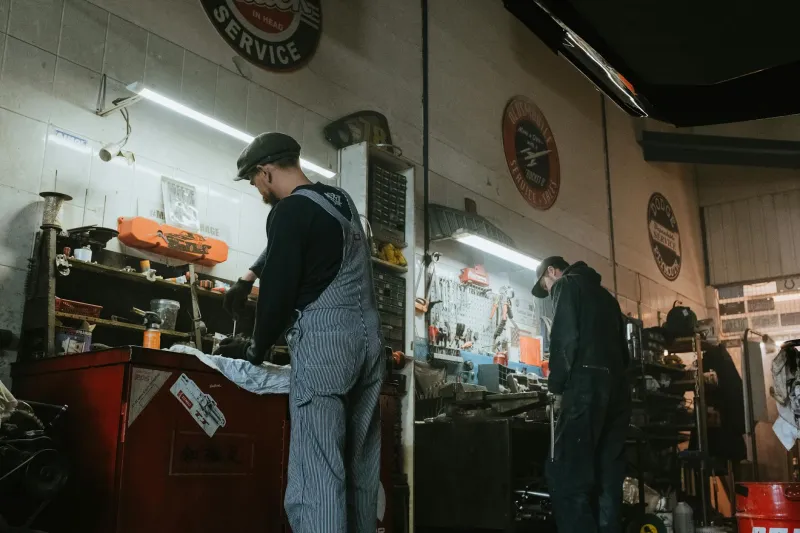
Walk into any small American town before 1995, and you'd find the same story repeated on every corner: Joe's Garage, where Joe actually worked on your car. Mike's Auto Shop, where Mike remembered that your transmission made that funny noise last winter. These weren't corporate chains with rotating staff and scripted service — they were neighborhood institutions built on something the internet can't replicate: genuine human relationships.
Your mechanic knew your car's history better than your medical records. He remembered the time you drove through that massive pothole on Elm Street, the way you always waited too long between oil changes, and exactly how your engine sounded when it was happy. More importantly, he knew that his reputation lived or died based on word-of-mouth in a community where everyone knew everyone else's business.
 Photo: Elm Street, via image.pmgstatic.com
The Handshake Economy
Finding a mechanic in 1975 didn't involve scrolling through dozens of online reviews or comparing star ratings. You asked your neighbor, your coworker, or your brother-in-law. "Who do you trust with your car?" was a question that carried real weight because the person answering it was staking their own reputation on the recommendation.
This system worked because it had to. There was no Yelp to hide behind, no Google reviews to manipulate, and no way to disappear into digital anonymity if you screwed up someone's transmission. Your business lived in your community, and your community held you accountable in ways that no online platform ever could.
Mechanics built multi-generational relationships. They worked on your father's Buick, then your first car, then eventually your son's pickup truck. They knew your family's driving habits, your budget constraints, and your tolerance for mechanical quirks. When your mechanic said, "You can probably get another year out of those brakes," you believed him — not because of his online rating, but because he'd been right about your car for the past fifteen years.
The Digital Disruption
Today's mechanic selection process reads like a consumer research project. We check Google reviews, cross-reference Yelp ratings, scroll through Better Business Bureau complaints, and analyze response patterns to negative feedback. We've turned choosing someone to fix our car into the same algorithm-driven decision-making process we use for picking restaurants or hotels.
 Photo: Better Business Bureau, via hiphopcorner.fr
The modern American driver approaches their car troubles like a detective investigating a crime scene. We photograph error codes, research symptoms on forums, and arrive at the shop armed with printouts from automotive websites. We're simultaneously more informed and less trusting than any generation of drivers before us.
When Five Stars Don't Tell the Story
Here's what those online reviews can't capture: the mechanic who stayed late to finish your car because he knew you needed it for work the next morning. The shop that called to tell you the problem was cheaper to fix than they originally quoted. The garage that kept your old Camaro running for three years past its expiration date because they understood what that car meant to you.
Conversely, those same review systems can't account for the customer who left a one-star review because they were angry about the price of genuine parts, or the competitor who created fake accounts to trash a rival's reputation. The digital feedback loop that was supposed to make everything more transparent has instead created new ways to game the system.
The Economics of Trust
The old system wasn't perfect, but it was brutally honest about one thing: reputation was everything. A mechanic who consistently overcharged or performed shoddy work wouldn't survive in a small community where everyone knew each other. Word traveled fast, and bad mechanics went out of business.
Today's automotive service industry operates on volume and turnover. Chain shops rely on corporate marketing budgets and national advertising campaigns more than local reputation. The mechanic who works on your car this week might be gone next month, transferred to another location or moved on to another company entirely.
What We Lost in Translation
Something fundamental changed when we traded personal relationships for digital ratings. The neighborhood mechanic didn't just fix your car — he was part of your community's social fabric. He knew when times were tough and might let you slide on payment until payday. He understood that your teenager's first car needed to be reliable above all else, even if it wasn't profitable for him.
The review-driven marketplace has made it easier to find a mechanic, but harder to find your mechanic. We've gained convenience and lost continuity. We can compare prices instantly but struggle to build the kind of long-term relationships that once defined automotive service.
The Trust Gap Widens
As cars have become more complex and expensive, our need for trustworthy service has never been higher. Yet we're asking strangers to work on machines that cost more than many Americans' annual salaries, guided primarily by the opinions of other strangers on the internet.
The gap between then and now isn't just about technology — it's about the fundamental way we build and maintain trust. We've replaced handshakes with algorithms, and in doing so, we've lost something that can't be quantified in star ratings: the peace of mind that comes from knowing the person working on your car has a genuine investment in getting it right.
Maybe that's the real price of progress: we gained the ability to find anyone, but lost the comfort of knowing someone.