Three Years to Obsolete: Why Your Car Now Depreciates Like a Laptop

Photo by Photo by Arteum.ro on Unsplash on Unsplash
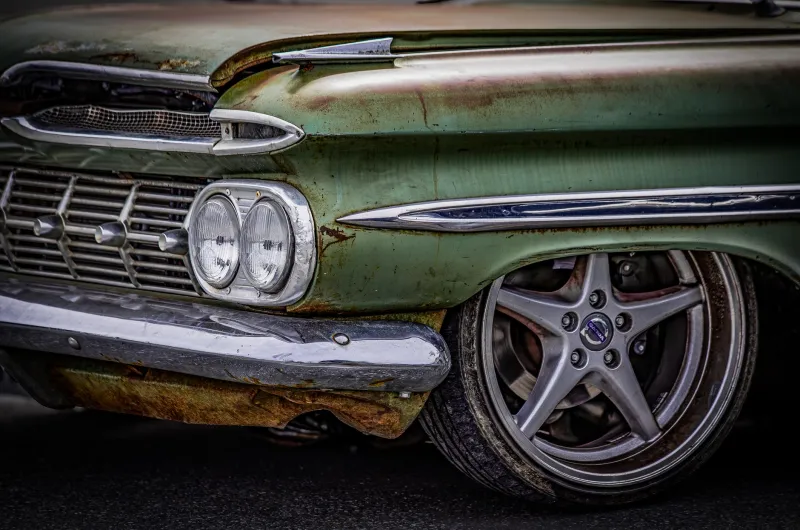
In 1975, a man bought a Chevy Impala, drove it for twelve years, sold it to his nephew, and the nephew drove it for six more. Nobody called the car outdated. The word barely applied. A car aged the way a person aged — gradually, visibly, and with a depreciation curve you could set your watch by.
Today, a three-year-old vehicle can be rejected by a buyer because its screen is small, its software won't update, or its phone-mirroring protocol has moved on. The body might be perfect. The engine might have another 150,000 miles in it. None of that matters. The car feels old, and feeling old is what kills resale value.
Something fundamental shifted in what a car is — and the financial consequences are bigger than most people realize.
When Value Was Measured in Rust
The old depreciation model was brutally simple. A car lost value based on mileage, rust, and mechanical wear. A 1975 buyer looked under the hood, kicked the tires, and checked the floor pans for rot. Age itself wasn't disqualifying — plenty of neighborhoods had that one twenty-year-old sedan parked under the elm tree, still running, still registered, still somebody's daily driver.
This created a stable used-car market. Value declined predictably, like a staircase walking downward. A ten-year-old car was worth a known fraction of its original price, and that fraction was roughly the same for every make and model. Depreciation was boring. Boring is good when it's your money.
The Screen Changed Everything
Modern cars packed in the tech — big touchscreens, connected services, over-the-air updates, driver-assistance suites. And tech depreciates according to tech rules, not automotive rules. Your five-year-old laptop still computes just fine, but nobody wants it. The same logic now applies to your five-year-old SUV with the small display and no wireless CarPlay.
The problem compounds in three ways. First, infotainment and software features date faster than any mechanical part ever did — a phone standard can become obsolete in three years, while a water pump lasts ten. Second, subscription features muddle the value proposition: a used buyer may inherit a car whose best features require monthly payments to the manufacturer. Third, electric vehicles introduced an entirely new depreciation variable — battery health — that behaves more like smartphone battery degradation than engine wear, and the market still hasn't settled on how to price it.
The result is a strange bifurcation. Some EVs have suffered resale collapses that would have been unthinkable for a comparable gas car in any era. Meanwhile, the mechanical parts of modern cars — engines, transmissions, frames — are more durable than ever.
The Oldest Fleet in History
Here's the paradox at the heart of it: even as cars feel old faster, Americans are keeping them longer than ever. The average age of vehicles on US roads has climbed year after year, recently crossing twelve years — a record. New car prices pushed people to hold on. Quality improvements made holding on possible. A well-maintained modern car can genuinely run for 200,000 miles, a milestone that would have been exceptional in 1975.
So we've arrived at an odd situation. The hardware lasts longer than ever. The software makes it feel obsolete sooner than ever. And the price of new has never been higher, with average transaction costs well above $47,000.
What This Means for Your Money
The practical takeaway is a shift in how you should think about car ownership. In the old model, depreciation was the biggest cost of car ownership, full stop. In the new model, the smartest financial move may be leaning into the hardware's longevity: buy the car, ignore the screen, and drive it until the wheels fall off — because the mechanical core will outlast its tech relevance many times over.
The buyers getting burned are the ones treating a car like a phone — upgrading every few years to stay current — while absorbing automotive-sized depreciation with each swap. A car is still the second-largest purchase most households make. It just no longer behaves like one, and the people who understand that gap are the ones who keep more of their money.
Your grandfather's Impala aged with him because everything about it aged at the same speed. Today's car ages in two timelines at once — a durable body on a fast-ticking digital clock — and until the market figures out how to price that, the depreciation curve belongs to whoever understands which clock they're buying.