You Used to Know Exactly When Your Car Needed Oil — Now the Car Decides and Won't Tell You Why
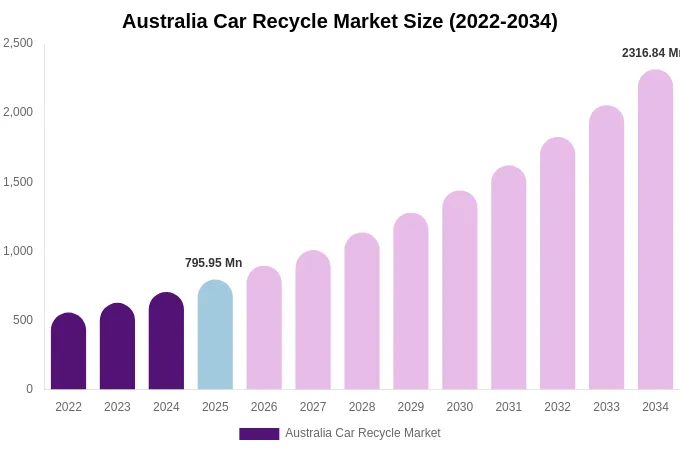
Photo: car engine diagnostic computer mechanic modern versus old maintenance, via reedintelligence.com
Somewhere in America right now, there's a person driving a vehicle with a dashboard light that says something like Service Due Soon. They don't know what service. They don't know how soon. They don't know if it's urgent or routine, cheap or expensive. They just know that a light is on, and that finding out what it means will probably cost them a diagnostic fee before anyone even touches a wrench.
This is the modern driver's relationship with vehicle maintenance. And compared to what it looked like fifty years ago, it's almost unrecognizable.
The 3,000-Mile Rule Was a Number You Owned
For most of the latter half of the twentieth century, car maintenance operated on a beautifully simple principle: change your oil every 3,000 miles. That number was printed on a small sticker in the upper left corner of your windshield by the mechanic who did the last change. You watched your odometer. When the numbers lined up, you went back.
You didn't need an app. You didn't need a dealer. You didn't need a notification. You needed to be able to read two numbers and subtract.
Beyond oil, the maintenance rhythm of a 1970s or 80s vehicle was similarly transparent. You checked the tire tread with a penny. You could see the brake pads wearing down if you knew where to look — and most drivers did, or had a neighbor who did. Belts cracked visibly before they snapped. Hoses got soft and spongy in a way you could feel when you squeezed them during an oil check.
The car communicated in physical language. Smell, sound, texture, visual inspection. None of it required a computer science degree.
The Backyard Mechanic Was a Real Thing
It's worth pausing on how common home maintenance actually was. In the 1970s and 80s, changing your own oil was a normal Saturday activity for a significant portion of American car owners. Spark plugs, air filters, brake pads — these were tasks that required basic tools, a free afternoon, and a Chilton manual from the auto parts store. That manual, for the uninitiated, was a thick, grease-stained paperback that explained in plain language how every system in your specific vehicle worked and how to service it yourself.
Chilton manuals sold millions of copies. There was a reason for that. People actually used them.
The economic logic was obvious: labor costs money, parts don't cost that much, and if you have the time and the driveway, you can close the gap yourself. For working-class and middle-class families, DIY maintenance wasn't a hobby — it was a budget strategy.
When the Computer Started Making the Decisions
The transition happened in stages. Engine management computers arrived in the early 1980s, initially just to control fuel injection and emissions systems. By the 1990s, the OBD-II standard required all new vehicles sold in the US to have a standardized diagnostic port — a concession to transparency that, in theory, meant any mechanic with the right reader could access your car's error codes.
But standardized access to error codes is not the same as owner transparency. Reading a code tells you a system has flagged a fault. It doesn't tell you what caused it, how serious it is, or what it will cost to fix. That interpretation still requires expertise — and increasingly, proprietary software that only the dealer or a well-equipped independent shop can run.
Service intervals followed a similar trajectory. Modern vehicles use algorithms — pulling in data from engine temperature cycles, driving patterns, idle time, load conditions, and oil viscosity sensors — to calculate when service is actually needed. This is, objectively, more sophisticated than a fixed mileage sticker. A car that's driven gently on the highway genuinely needs less frequent oil changes than one that idles in Chicago traffic every morning.
But the sophistication comes at a cost: the owner is no longer part of the calculation. The algorithm runs. The light comes on. You go to the dealer.
The Sealed Engine and What It Means
Pop the hood on a modern vehicle and you'll often find an engine bay that looks more like a piece of consumer electronics than a mechanical system. Plastic covers hide most of the components. The dipstick — that humble, indispensable tool that let any driver check their own oil level in thirty seconds — has been eliminated from some newer models entirely, replaced by an electronic sensor.
Some manufacturers have moved to sealed transmissions that supposedly never need fluid changes. Others have extended oil change intervals to 10,000 or even 15,000 miles — intervals that are probably fine under ideal conditions but that leave drivers with no intuitive feel for where they are in the maintenance cycle.
And then there's the software layer. Modern vehicles generate enormous amounts of diagnostic data. Some of that data is shared with owners through apps or dashboard displays. Much of it is not. Proprietary software locks mean that even professional mechanics outside the dealer network sometimes struggle to access the full picture — a situation that has generated ongoing legislative battles around right-to-repair laws in multiple states.
What This Costs You (Beyond the Obvious)
The financial dimension of this shift is real and underappreciated. When maintenance knowledge lived in your head and your hands, you had leverage. You could get a second opinion. You could do the work yourself. You could evaluate whether a recommended service was actually necessary.
When maintenance knowledge lives in an encrypted computer system that only the manufacturer's network can fully interpret, that leverage disappears. You are, by design, dependent. The dealer knows what the car knows. You know what the dealer chooses to tell you.
This isn't a conspiracy — it's a business model. And it's a profitable one. Dealer service departments generate substantial revenue, and the opacity of modern vehicle systems helps ensure a steady flow of customers who have no real alternative.
The Sticker in the Corner of the Windshield
That little oil change sticker — the one that told you exactly where you stood, in plain numbers, without requiring any technology to interpret — was a small thing. But it represented something important: the idea that the person driving the car should understand the car.
Today's vehicles are extraordinary machines. Safer, more efficient, more capable than anything that rolled off a Detroit assembly line in 1975. But the relationship between driver and machine has quietly inverted. The car used to serve the driver's knowledge. Now, in many ways, the driver serves the car's systems.
You still need to change the oil. You just no longer get to decide when.