The Great American Road Trip Once Taught Kids Geography — Now They Learn Netflix Shows Instead
When Boredom Was the Best Teacher
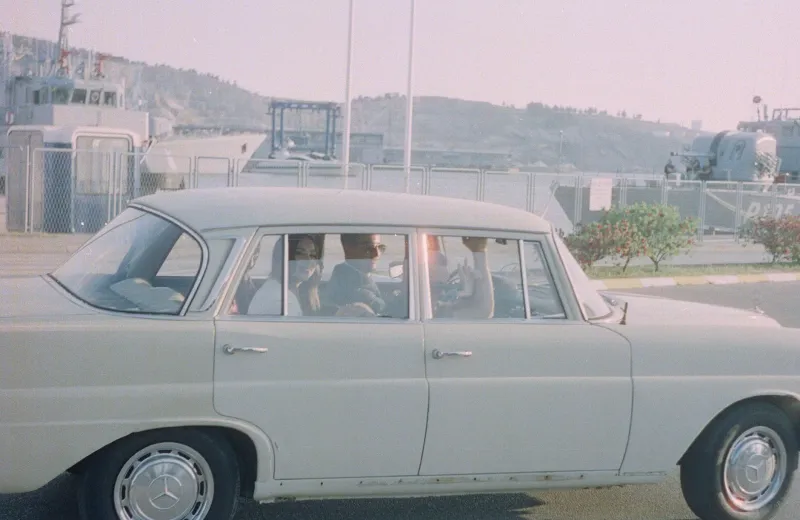
Picture this: It's 1972, and the Johnson family is driving from Detroit to Yellowstone in their wood-paneled station wagon. No air conditioning, no DVD players, no smartphones. Just four kids crammed into the back seat with nothing to do but watch America roll by at 55 miles per hour. By the time they reach Wyoming, those children will have absorbed more geography, geology, and cultural awareness than any textbook could provide.
This wasn't entertainment — it was accidental education on a massive scale. An entire generation of Americans learned to read the landscape, recognize regional architecture, and understand the vastness of their country through car windows. They developed patience, observation skills, and a sense of place that today's screen-equipped travelers will never experience.
The Backseat University
The pre-digital road trip was an intensive course in American geography that lasted for hours, sometimes days. Children learned to identify different farming patterns as they crossed state lines. They noticed how the trees changed from oak to pine to desert scrub. They observed the gradual shift in architecture, from New England colonials to Midwest farmhouses to Southwest adobe.
Without screens to distract them, kids became amateur meteorologists, watching storm systems develop on the horizon. They learned to read road signs and calculate distances. They played games that required actual observation: counting license plates from different states, spotting different types of livestock, identifying landmarks from roadside billboards.
The family atlas became a sacred text, passed around the backseat like a treasure map. Children followed their progress with their fingers, learning the relationship between map symbols and real terrain. They understood scale, direction, and the logic of highway systems in ways that GPS navigation has made obsolete.
The Democracy of Discomfort
Those long car trips were remarkably egalitarian experiences. Rich or poor, every American family dealt with the same challenges: cramped quarters, questionable roadside food, and the eternal question of "Are we there yet?" Kids learned to negotiate space, share resources, and cope with extended periods of mild discomfort — skills that served them well in adult life.
The lack of individual entertainment forced families to interact. Parents told stories about their own childhoods, shared family history, and pointed out landmarks from their past. Children learned about their heritage through the places their parents had lived and worked. The car became a moving classroom where oral tradition flourished.
Today's Isolation Pods
Modern family vehicles have evolved into mobile entertainment centers that would make a 1970s child's head spin. Individual screens, wireless headphones, climate zones, and streaming services have transformed the backseat experience into something resembling a luxury airline cabin.
Today's children can travel from New York to California without ever looking out the window. They watch movies, play games, and video chat with friends as if they were sitting in their bedroom at home. The landscape becomes irrelevant background noise to their digital experiences.
What the Screens Can't Teach
No iPad app can replicate the visceral understanding of distance that comes from watching telephone poles tick by for eight hours straight. No GPS system teaches the relationship between topography and settlement patterns the way watching small towns cluster around river valleys does. No educational video conveys the sheer scale of American agriculture like driving through Nebraska in August.
The old road trips taught children that America was big in ways that maps and statistics couldn't communicate. They learned patience through necessity, developed attention spans through boredom, and gained cultural awareness through observation. These weren't planned lessons — they were the inevitable result of having nothing else to do but pay attention.
The Geography of Memory
Ask any American over 40 about their childhood road trips, and they'll describe specific stretches of highway with photographic detail. They remember the exact curve where the Rocky Mountains first came into view, the specific truck stop where they always bought postcards, the precise mile marker where their father always told the same joke.
 Photo: Rocky Mountains, via i.pinimg.com
These memories aren't just nostalgic — they represent a deep, embodied knowledge of American geography that's rapidly disappearing. Today's children might remember which movie they watched while crossing Kansas, but they won't remember Kansas itself.
The Lost Art of Looking
Something profound happened when American families spent hours together in confined spaces with nothing to do but observe their surroundings. Children developed what educators call "environmental literacy" — the ability to read landscapes, understand human settlement patterns, and appreciate regional differences.
They learned to distinguish between different types of farming operations, recognize geological formations, and understand why certain industries clustered in specific locations. They absorbed lessons about American history, economics, and culture through direct observation rather than formal instruction.
The Attention Economy Strikes Back
Today's entertainment systems have solved the problem of boredom, but they've created new challenges. Children arrive at destinations without any sense of how they got there or what they passed along the way. They've traveled hundreds of miles but learned nothing about the places they've visited.
Parents, relieved that their children are quiet and occupied, don't realize what's being lost. The screens that keep kids calm also keep them disconnected from the world outside their windows.
More Than Just Miles
The old road trips weren't just about getting from point A to point B — they were about understanding the space in between. Children learned that America wasn't just a collection of cities connected by airports, but a continuous landscape of farms, forests, deserts, and mountains. They developed a sense of their country's physical reality that no virtual experience can replicate.
This geographic literacy had practical benefits too. Children who grew up watching the landscape learned to navigate intuitively, understand weather patterns, and appreciate regional differences in ways that served them throughout their lives.
The Price of Convenience
We've gained peace and quiet in the family car, but we've lost something irreplaceable: the shared experience of discovering America together. Today's road trips might be more comfortable, but they're far less educational. We've traded window seats for screen time, and in doing so, we've closed our children's eyes to the world outside.
The gap between then and now isn't just about technology — it's about attention, patience, and the willingness to be present in the moment. The children who once learned geography through boredom are now parents themselves, and they're choosing convenience over curiosity. In solving the problem of restless kids, we've created a new problem: children who can travel anywhere but see nothing along the way.