America's Lost Weekend Ritual — When Families Drove Nowhere Just to Be Together
America's Lost Weekend Ritual — When Families Drove Nowhere Just to Be Together
Every Sunday afternoon in 1962, the Johnson family from suburban Cleveland would finish their pot roast dinner, pile into their powder-blue Rambler, and drive. Not to anywhere specific — just drive. Sometimes they'd end up at a roadside ice cream stand. Sometimes they'd discover a new neighborhood or a hidden lake. Most of the time, they'd simply cruise the back roads for an hour or two before heading home.
This wasn't vacation planning or errand running. This was the Sunday drive, and it was as American as apple pie.
When Going Nowhere Was the Whole Point
The Sunday drive emerged in the 1920s and reached its cultural peak in the post-war boom of the 1950s and 60s. For millions of American families, it became the defining weekend ritual — a leisurely expedition with no destination beyond whatever looked interesting along the way.
The concept was beautifully simple: load the family into the car after Sunday dinner and explore. Parents would point the car toward unfamiliar roads, kids would spot interesting sights from the back seat, and everyone would discover their own corner of America one random turn at a time.
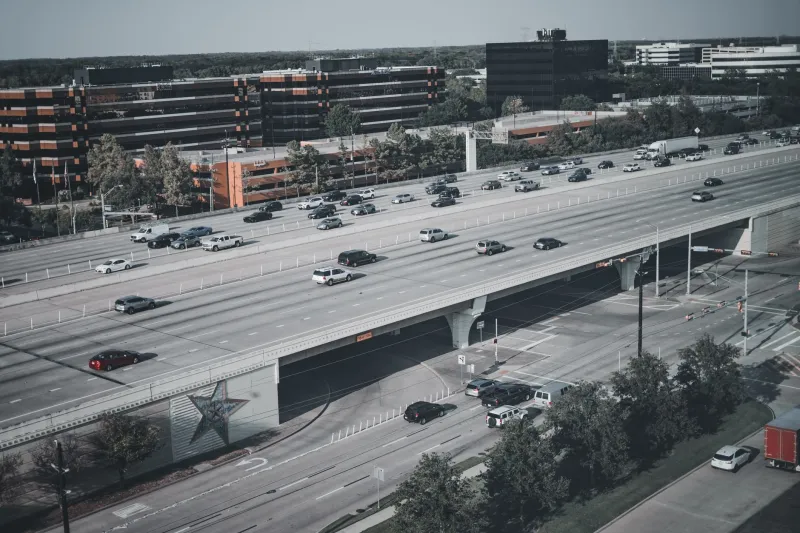
Gas cost thirty cents a gallon, cars were built for comfort over efficiency, and the interstate highway system had opened up endless ribbons of smooth asphalt connecting small towns and scenic routes. America had built the perfect infrastructure for purposeless exploration, and families embraced it wholeheartedly.
 Photo: Interstate Highway System, via images.crazygames.com
The Sunday drive wasn't about getting somewhere — it was about being somewhere together. No phones, no schedules, no predetermined outcomes. Just the family, the car, and whatever lay around the next bend.
The Golden Age of Automotive Wandering
By the 1960s, the Sunday drive had become so embedded in American culture that businesses planned around it. Ice cream stands positioned themselves on scenic routes. Tourist attractions advertised specifically to Sunday drivers. Small towns created "scenic drives" with historical markers and roadside parks designed for impromptu family stops.
Car manufacturers understood their audience. Vehicles from this era prioritized comfort and visibility over performance. Wide bench seats accommodated entire families, expansive windows provided panoramic views, and smooth suspensions turned even rough country roads into comfortable cruising experiences.
The ritual had its own unwritten rules and traditions. Families developed favorite routes, discovered hidden gems, and created shared memories around unexpected discoveries. Children learned geography not from textbooks but from reading road signs and exploring new territories from the back seat.
Sunday drives were democratic entertainment — equally accessible to wealthy executives and factory workers. The only requirements were a car, some gas money, and an afternoon to spare. It was perhaps the most egalitarian form of family entertainment America had ever created.
The Slow Death of Wandering
The decline of the Sunday drive didn't happen overnight. It was a gradual erosion caused by multiple cultural and economic shifts that fundamentally changed how Americans thought about travel and leisure time.
The 1973 oil crisis delivered the first major blow. When gas prices quadrupled almost overnight, driving for pleasure suddenly seemed wasteful. Families who had never thought twice about burning a tank of gas exploring back roads began calculating the cost of every mile.
Suburban sprawl changed the landscape itself. The charming country roads that once started just outside town were gradually swallowed by strip malls, housing developments, and commercial districts. The scenic routes that had made Sunday drives magical were either paved over or surrounded by suburban development.
Rising crime rates in the 1970s and 80s made parents more cautious about random exploration. The idea of driving down unfamiliar roads with the family began to feel risky rather than adventurous. Parents started preferring known destinations over spontaneous discovery.
When Entertainment Moved Indoors
The real death blow came from changing entertainment preferences. Cable television arrived in the 1980s, bringing dozens of channels into American living rooms. Video game systems turned Sunday afternoons into indoor activities. Shopping malls provided climate-controlled family entertainment that didn't depend on weather or gas prices.
By the 1990s, American families had fundamentally redefined leisure time. Instead of creating entertainment through exploration, they began consuming entertainment that others had created. The shift from active to passive recreation changed everything.
Children who had once begged their parents to "drive by the old farmhouse" or "see what's down that road" were now more interested in whatever was playing on Nickelodeon. Parents who had once found relaxation in aimless cruising were increasingly focused on structured activities and planned destinations.
The Digital Nail in the Coffin
The final transformation came with GPS technology and smartphones. These devices solved the "problem" of getting lost — but getting lost had never actually been a problem for Sunday drivers. It had been the whole point.
Modern navigation systems eliminated the possibility of genuine discovery. Every road leads to a known destination. Every route is optimized for efficiency. The concept of driving without knowing where you're going became literally impossible for families accustomed to digital guidance.
Social media created additional pressure to document and share experiences, turning leisure time into content creation. The quiet, unstructured nature of Sunday drives didn't translate well to Instagram posts or Facebook check-ins.
What We Lost in the Back Seat
The disappearance of the Sunday drive represents more than just a change in entertainment preferences — it's the loss of a uniquely valuable form of family time.
Unlike modern family activities, Sunday drives couldn't be rushed, optimized, or multi-tasked. They required presence, patience, and genuine interaction. Parents and children were literally captive audiences for each other, creating natural opportunities for conversation and shared observation.
The drives taught children important life skills that are increasingly rare: the ability to be bored without being entertained, the patience to enjoy slow-paced activities, and the appreciation for simple pleasures like scenery and exploration.
Perhaps most importantly, Sunday drives gave families a shared sense of discovery. Every expedition created unique memories that belonged exclusively to that family. These weren't experiences that could be replicated or purchased — they were genuinely individual adventures.
The Modern Sunday Drive
Today's equivalent of the Sunday drive is the planned road trip, complete with GPS coordinates, Yelp reviews, and predetermined photo opportunities. We've replaced spontaneous exploration with curated experiences, trading discovery for efficiency.
Families still take drives together, but they're usually purposeful journeys to specific destinations. The idea of driving for the sake of driving, of spending time together without any agenda beyond togetherness, has become almost incomprehensible to modern parents.
When contemporary families do attempt unstructured driving time, they often struggle with the silence and lack of stimulation that previous generations found relaxing. The absence of screens, scheduled activities, and predetermined outcomes can feel uncomfortable rather than liberating.
Rediscovering the Road to Nowhere
Some families are attempting to revive the Sunday drive tradition, often calling it "mindful driving" or "analog exploration." These modern versions typically involve putting away devices, choosing unfamiliar routes, and committing to spending unstructured time together in the car.
The results are often surprising. Children who initially resist the lack of entertainment often become engaged observers of their surroundings. Parents discover that unstructured car time creates opportunities for conversations that wouldn't happen otherwise.
But recreating the original Sunday drive experience requires fighting against decades of cultural change. Modern families must consciously choose inefficiency, embrace uncertainty, and resist the urge to optimize their leisure time.
The gap between then and now isn't just about transportation or technology — it's about our relationship with time, exploration, and each other. We've gained efficiency, safety, and entertainment options, but we've lost something harder to quantify: the simple pleasure of going nowhere together, and the family bonds that formed along the way.
Your grandparents' generation understood something we've forgotten: sometimes the best destinations are the ones you never planned to visit, and the most valuable family time happens when you're not trying to create it. They just got in the car and drove, trusting that the journey itself would be worth the trip.