Once Upon a Time, Every Kid Could Name Every Car on the Block — That World Is Gone
Photo: diverse car brands logos parking lot modern variety, via cdn.shopify.com
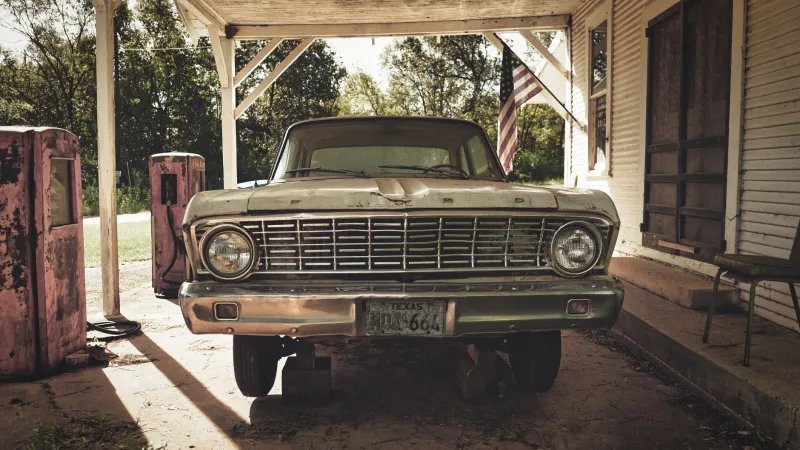
Ask a forty-five-year-old American when they first learned to identify cars, and they'll probably tell you it just happened. You absorbed it. You grew up surrounded by Chevys and Fords and Dodges and Buicks, and by the time you were in middle school you could spot a '72 Chevelle from two blocks away by the shape of its taillights alone.
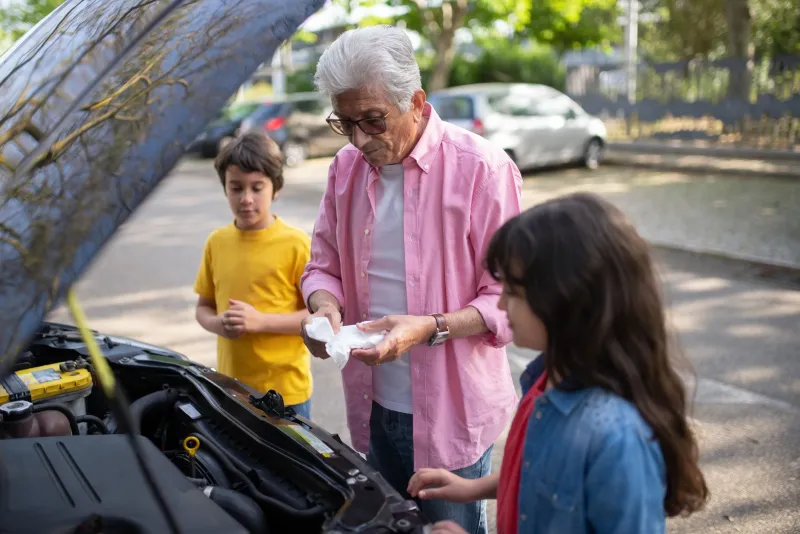
Car identification was a kind of cultural literacy. It wasn't taught. It was caught — picked up in driveways, at gas stations, in the back seat on family drives where your dad would narrate the road like a sportscaster. There's a Pontiac GTO. That's an AMC Pacer — don't laugh, your uncle had one. Kids played games with it. Families bonded over it.
Today, that shared language is dissolving. And the gap between the world that made it possible and the world we're driving through now is wider than most people stop to consider.
The Manageable Universe of American Car Brands
In the mid-1970s, the American automotive landscape was complex by the standards of the time — but it was knowable. The domestic side was anchored by the Big Three: General Motors (with its constellation of Chevrolet, Buick, Oldsmobile, Pontiac, and Cadillac), Ford (plus Lincoln and Mercury), and Chrysler (Dodge, Plymouth, and Chrysler itself). That's roughly a dozen distinct marques, all produced domestically, all with strong visual identities and loyal regional followings.
Imports existed, but they occupied a distinct lane — literally and culturally. Volkswagen was the quirky choice. Toyota and Datsun (later Nissan) were the frugal choice. Honda was just getting started. Mercedes and BMW were aspirational European imports that most families only ever admired from a distance. You could count the meaningful import brands on one hand.
The total number of brands that an average American driver might realistically encounter on a daily commute? Maybe fifteen to twenty, tops. And the visual differences between them were dramatic enough that recognition was easy. A Cadillac looked nothing like a Chevrolet. A Volkswagen Beetle was unmistakable from a quarter mile away.
This was a world where automotive literacy was achievable. Where a kid could be genuinely encyclopedic.
The Explosion Nobody Fully Tracked
The fragmentation began slowly, then accelerated. The 1980s brought a wave of Japanese manufacturers establishing serious American footholds. The 1990s introduced luxury sub-brands — Acura, Lexus, Infiniti — created specifically to help Japanese automakers sell more expensive cars without cannibalizing their mainstream identities. It was a smart move. It also added another layer of complexity to the brand map.
European manufacturers deepened their presence. Korean brands, which had arrived in the mid-80s as budget curiosities, matured into genuine mainstream competitors. By the 2000s, Hyundai and Kia were selling millions of vehicles annually to American buyers who, a generation earlier, might not have been able to locate South Korea on a map.
Then came the real disruption. The 2010s brought Tesla — a company that didn't play by any of the established rules — and in its wake, a flood of EV startups with names that sounded like password requirements: Rivian, Lucid, Fisker, Polestar, Canoo. Some survived. Some didn't. All of them added noise to an already crowded signal.
And then there's China. BYD, NIO, Xpeng, Li Auto, and dozens of smaller manufacturers are now legitimate global players, with some beginning to make moves toward the American market. The average American driver has heard of approximately none of them.
The Logo Problem
Here's a simple test: print out the badges of the fifty largest car brands currently selling vehicles globally and ask someone to identify them cold. Most people under fifty will struggle past the top fifteen. Most people over fifty will struggle past twenty.
The logos themselves have become part of the problem. In an era when every brand is chasing the same minimalist aesthetic — flat, geometric, monochromatic — the visual differentiation that once made instant recognition possible has largely disappeared. Volkswagen flattened its logo. BMW simplified its roundel. Cadillac went geometric. Kia rebranded with a mark that, at highway speed, is nearly impossible to distinguish from several competitors.
The irony is that as the number of brands has multiplied, the distinctiveness of each individual brand has often decreased. More logos, less legibility.
What Brand Loyalty Looks Like Now
The old model of brand loyalty was almost tribal. Ford families bought Fords. Chevy families bought Chevys. These weren't just purchasing preferences — they were identities, sometimes passed down across three generations. You knew the brand because you grew up with it in the driveway.
That kind of loyalty has been eroding for decades, and the fragmentation of the market has accelerated the erosion. When there are fifty credible options across a dozen countries, the emotional attachment to any single marque becomes harder to sustain. Younger buyers, in particular, tend to shop by feature set and monthly payment rather than by badge.
The manufacturers know this. It's part of why legacy brands have invested so heavily in lifestyle marketing — trying to rebuild an emotional connection that the market complexity has diluted.
The Now Gap in a Parking Lot
Park yourself at the entrance to any large shopping mall parking lot on a Saturday afternoon and try the game your parents used to play. Name every car that passes. Count how many you can confidently identify — not just the brand, but the model.
For most people, it's humbling. Not because they're uninformed, but because the world has changed around them in ways that happened gradually enough to go unnoticed. The knowable universe of American car culture has given way to something genuinely vast, genuinely global, and genuinely difficult to navigate without a smartphone.
Your parents could tell you every car on the block. That wasn't just a party trick. It was evidence of a simpler world — one where the things around you were familiar enough to name.