The Gas Station Bathroom Was Free, Filthy, and Somehow Perfect — Here's What Replaced It

Photo by Photo by Gayatri Malhotra on Unsplash on Unsplash
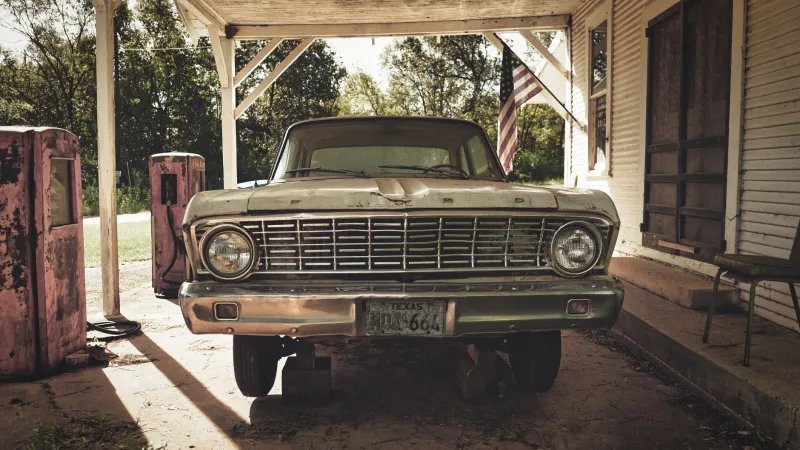
There was a time when pulling into a gas station meant one of two things: you needed fuel, or you needed the bathroom. Often both. And the transaction was simple. You walked up to the attendant — or later, you found the key hanging on a wooden board near the register — and you went. No account required. No payment screen. No QR code. Just a rusty key, a heavy door, and whatever awaited you inside.
It wasn't glamorous. Let's be honest about that. The gas station bathroom of the 1970s and 80s was not a place you lingered. The floors were wet for reasons you chose not to investigate. The soap dispenser was either empty or producing something that looked like it predated the Carter administration. But it was there. Reliably, universally, freely there — for truckers, road-trippers, families with restless kids, and anyone else who happened to need it.
Something has changed. And the gap between then and now is bigger than most drivers realize.
The Key on the Board Was a Social Agreement
The famous hubcap key — or the wooden paddle, or the brick tied to a chain — was more than just a theft deterrent. It was a symbol of a quiet social contract between gas stations and the American driving public. You showed up. They helped you. You maybe bought something. Everyone went on their way.
Station owners in that era often knew their regulars by name. A long-haul driver who stopped every Tuesday could expect a nod and the key without even asking. Local families on weekend drives got the same. There was a human layer to the whole thing that made the transaction feel less like commerce and more like community.
The bathroom wasn't a profit center. It was overhead — an inconvenient but accepted cost of doing business on America's roads.
When the Convenience Store Took Over
The shift started in the 1980s and accelerated through the 90s. As gas stations evolved into convenience stores, the calculus changed. Suddenly, the bathroom was positioned inside — past the hot dogs, past the energy drinks, past the lottery tickets. Getting to it required walking through a gauntlet of impulse purchases. That wasn't an accident.
But access was still free. Still assumed. The bathroom remained part of the unspoken agreement, even if the key was now attached to a comically oversized plastic spatula to discourage walk-offs.
Then came the sanitization era. Post-pandemic sensibilities, combined with rising operational costs and shifting real estate economics along major highways, started to quietly reframe what a gas station bathroom was for. If it could be made nicer, could it also be made chargeable?
The Premium Restroom Has Arrived — And It Wants Your Credit Card
Spend time at a modern EV charging hub along a major interstate corridor and you'll notice something different. The facilities are clean — genuinely clean, in a way that old-school gas stations never were. There's often natural light. Sometimes there's a scent diffuser. The floors are dry. The soap is real soap.
And in some locations, particularly those attached to boutique travel plazas or high-end charging networks, there's a fee. A small one — often a dollar or two, sometimes credited back against an in-store purchase — but a fee nonetheless. The bathroom has been monetized.
This isn't universal yet. But the trend line is clear. As EV infrastructure builds out and charging stops become destination experiences rather than quick fill-ups (because charging, unlike fueling, takes time), operators are investing heavily in the surrounding amenities. And when you invest heavily, you look for ways to recoup.
Some charging plaza operators have introduced app-based access for restrooms — scan your membership QR code to unlock the door. Others use purchase validation. The logic is reasonable enough from a business standpoint. The experience, though, is something else entirely.
What the Bathroom Tells Us About the Whole Trip
This might seem like a minor thing. A dollar for a clean bathroom versus a free grimy one — who's really complaining? But the gas station bathroom story is a small window into something larger happening across the entire driving experience.
Nearly every element of the road trip that was once assumed, free, and human-scaled has been repackaged, digitized, or monetized in the last two decades. The attendant who filled your tank knew your name. The app that processes your charging session knows your location history, your vehicle data, and your purchase preferences.
The bathroom key on the board was impractical and inefficient. It was also, in its own strange way, an act of trust. You showed up. They handed you the key. No data was exchanged. No profile was built.
Today's premium restroom is objectively better. Cleaner floors, working locks, actual paper towels. But it costs something — sometimes money, always data — and it operates within a commercial system that would have seemed bizarre to the guy who handed you that brick-weighted key back in 1984.
The Gap Is in the Assumption
The real shift isn't about cleanliness or price. It's about what we assume is included when we pull off the highway.
For most of the twentieth century, Americans assumed the road came with certain baseline courtesies. A bathroom you could use. Directions if you were lost. A place to stretch your legs without being upsold. Those assumptions have eroded, piece by piece, as the driving experience has been commercialized from every angle.
The gas station bathroom went from a free public service to a curated amenity. That's not just a restroom upgrade. That's a philosophy change — one that says no corner of the road trip is too small to be turned into a revenue opportunity.
Your grandfather would have found the whole thing baffling. He just needed the key.