When Breaking the Law Was a Family Activity: The Strange Era of the 55 MPH Nation
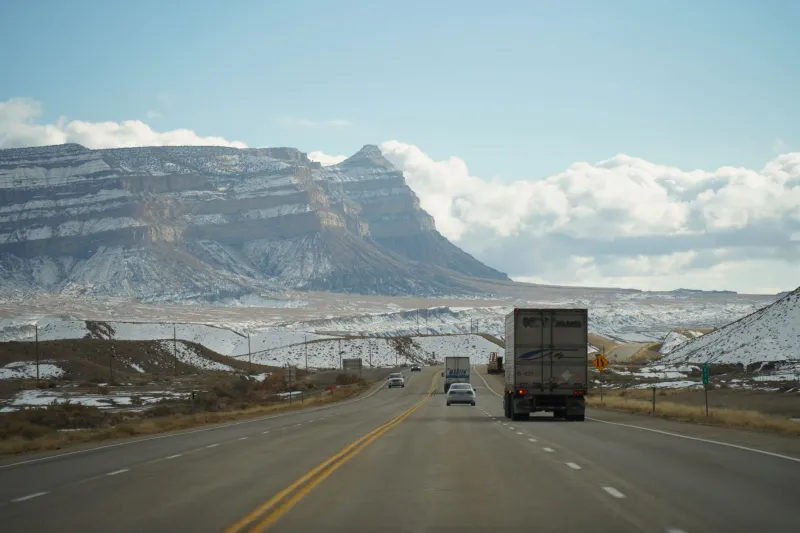
In 1974, America did something almost unthinkable today: it made lawbreakers out of nearly every licensed driver in the country, all at once, with the stroke of a pen.
The national 55 mph speed limit arrived during the oil crisis, sold as a sacrifice every citizen would make to stretch the country's gasoline supply. President Nixon signed it into law, highway signs went up from Maine to California, and for the next twenty-one years, the fastest legal road in America was slower than the top speed of a base-model Honda Civic.
What happened next is the part worth remembering.
The Whole Country Agreed to Pretend
Here's the thing about the 55 limit: almost nobody followed it. Surveys from the era found that the majority of drivers on rural interstates routinely cruised somewhere between 65 and 70 mph. The flow of traffic simply refused to obey the sign.
So the government responded with radar guns, and drivers responded with Fuzzbusters. The radio detector became a countertop bestseller at RadioShack, and CB radios exploded in popularity largely because truckers could warn each other about "Smokeys" hiding over the hill. A whole vocabulary developed — "bear in the air," "double nickel," "good buddy" — because 55 million people needed a way to coordinate their shared, polite rebellion.
Hollywood leaned into it. Smokey and the Bandit made outrunning the law on a Georgia interstate look like the most fun a person could have with a Trans Am. Burt Reynolds wasn't a villain. He was a folk hero.
That's the cultural detail that's easy to forget: violating the speed limit wasn't shameful. It was normal. The law and the people had a disagreement, and everyone quietly agreed the people were right.
The Toll Nobody Wanted to Talk About
The defenders of 55 had a real argument, though. The limit was credited with saving thousands of lives a year — studies suggested highway fatalities dropped meaningfully in the years after it took effect. Slower crashes are simply more survivable, and the numbers backed that up.
But the cost showed up in other ways. Truckers lost income as delivery times stretched. Rural towns along interstate exits watched travelers slow down just enough to stop skipping them entirely. And the average American absorbed a quiet, daily lesson: this law is a suggestion, and we all know it.
There's something corrosive about a rule everyone breaks. Either you enforce it aggressively — which meant speed traps and resentment — or you tolerate it, which teaches people that laws are negotiable. America chose a weird middle path: enforcement by lottery. Some people got tickets. Most didn't. Everyone rolled the dice.
The Repeal That Nobody Threw a Party For
Congress finally relented in 1987, letting rural interstates climb to 65. In 1995, the national limit was repealed entirely and the matter returned to the states. Montana briefly went back to a "reasonable and prudent" standard — which was, depending on your perspective, either glorious freedom or legal anarchy.
Today, Texas posts an 85 mph limit on some toll roads. The national speed limit is a trivia question. And yet the driving culture it created didn't vanish; it just evolved.
We Gained Cameras and Lost the Game
Here's the modern twist. The outlaw era of speed is ending — not because of radar guns, but because of software.
Speed cameras don't care about your CB radio. There's no Smokey to outsmart, no friendly warning passed along channel 19. The ticket arrives in the mail with a photograph, and the transaction is entirely between you and an algorithm.
Newer cars have gone further. Many now chime when you exceed the limit, some display the posted speed automatically, and a growing number will gently resist your right foot. European regulators now require intelligent speed assistance; American cars are inheriting the same features model year by model year. The open-road rebellion is being engineered out of existence, one soft warning chime at a time.
Is that bad? Fatalities per mile traveled are dramatically lower than in the 1970s, and speed was never the only factor. But something did get smaller. There was a time when the highway was a negotiation between the driver, the machine, and the law — and the driver had a fighting chance in every hand. Now the machine has quietly joined the other side.
The 55 limit taught a generation that Americans would ignore a law they found unreasonable. The next lesson may be that eventually, you don't need people to obey the law. You just need the car to.